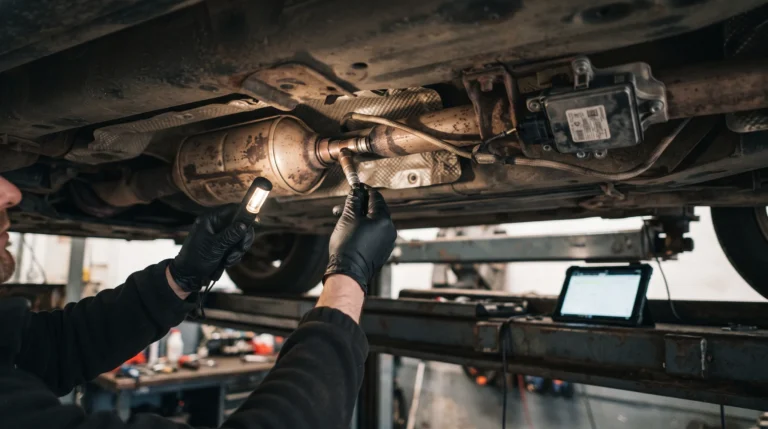

There’s a particular kind of frustration that comes with an AdBlue fault that seems to make no sense. You’ve filled the tank, you’ve had it checked, maybe you’ve even had a sensor replaced already and the warning light is still there, mocking you every time you start the engine. If that sounds familiar, and especially if the fault seems to come and go depending on how the car’s been driven that day, it’s worth looking somewhere most people never think to check: the purge valve.
It’s a small, unglamorous component that most drivers have never heard of until it starts causing problems. But when it fails, it can produce a fault picture that genuinely confuses even experienced mechanics who aren’t specifically familiar with AdBlue systems. So let’s properly unpack what it does, why it goes wrong, and what actually needs to happen to fix it.
What Is the AdBlue Purge Valve, and What’s It There For?
Every AdBlue dosing system needs a way to protect itself from freezing and from crystallisation building up in the lines when the vehicle isn’t running. That’s the purge valve’s entire job. When you switch the engine off, the system uses the purge valve to draw AdBlue fluid back out of the dosing lines and injector, returning it to the tank rather than leaving it sitting exposed in the lines where it could freeze in cold weather or crystallise over time.
Think of it as a safety mechanism that runs quietly in the background every single time you turn the ignition off, one that most drivers will never notice is even happening, right up until it stops working properly.
Why Does the Purge Valve Fail?
A purge valve failure tends to build up gradually rather than happening overnight, and there are a handful of usual suspects behind it.
Crystallisation is, once again, one of the biggest culprits in the AdBlue world generally, and the purge valve is no exception. If the valve doesn’t fully clear the lines on shutdown even slightly residual AdBlue left behind can crystallise and gradually restrict the valve’s own movement, creating a cycle where the fault gets progressively worse each time the car is used. This is the same underlying process behind several other faults we deal with regularly, including whether AdBlue crystallisation can actually be repaired.
Electrical faults are another common cause. The purge valve is solenoid-operated, meaning it relies on an electrical signal to actuate, and a wiring fault, a failing connector, or a damaged pump control module can all interrupt that signal just as effectively as a mechanically stuck valve would.
Cold weather exposure plays a role too, particularly for vehicles that spend a lot of time parked outside through winter. Repeated freeze-thaw cycles inside a system that isn’t purging properly put extra strain on seals and moving parts, accelerating wear that wouldn’t happen nearly as quickly in a garage-kept car.
And then there’s simple mechanical wear like any valve that opens and closes constantly over years of use, the internal components can degrade, stick, or fail outright with enough mileage and time behind them.
How Do You Know It’s the Purge Valve and Not Something Else?
This is genuinely the trickiest part of dealing with this fault, because purge valve problems tend to overlap heavily with symptoms of other AdBlue issues. A few patterns tend to point specifically toward the purge valve, though.
If the fault seems to get worse specifically after the car has been sitting for a while overnight, or over a weekend rather than appearing consistently during use, that’s a fairly strong signal, because it points toward something failing during the shutdown purge cycle rather than during active driving.
If you’ve already had other AdBlue components checked or replaced the tank sensor, the injector, even the pump and the fault still hasn’t been resolved, the purge valve is one of the next places worth looking at, precisely because it’s so commonly overlooked in a standard diagnostic pass. It’s also worth ruling out a failed heater unit, since AdBlue heater not working can produce a similarly stubborn, weather-linked fault pattern, and a NOx sensor fault can sometimes be mistaken for an AdBlue quality sensor issue too.
Fault codes specifically referencing the purge or the dosing module’s return-line function, rather than general tank or injector codes, are also a strong pointer our guide on AdBlue system fault codes explained is a useful reference if you want to understand what your scan tool is actually telling you.
And if the fault seems to correlate with cold weather or extended parking periods more than with mileage or driving pattern, that lines up closely with how purge valve failures typically develop.
How We Diagnose a Purge Valve Fault
Because this fault is so easily confused with others, we don’t jump straight to replacing parts. Our process is built around actually confirming the problem before touching anything.
We start with a full diagnostic scan to identify exactly which part of the dosing system the fault code is referencing, since purge-specific codes point us in a very different direction from tank, injector or sensor codes.
From there, we run an active test of the purge cycle itself essentially commanding the system to run its shutdown purge sequence while monitoring whether the valve is actually actuating and drawing fluid back as it should. This single test tells us more than almost anything else in the diagnostic process, because it directly confirms or rules out the valve as the source of the problem.
We also check the wiring and connector feeding the valve, since electrical faults here produce identical symptoms to a mechanically stuck valve, and the fix for each is completely different.
And where appropriate, we check for crystallisation elsewhere in the system too, since a purge valve that’s been struggling for a while often isn’t the only component affected by fluid left sitting in the lines.
What Does the Fix Actually Involve?
Once we know for certain the purge valve is the problem, the fix depends on exactly what’s wrong with it.
Where crystallisation is the main issue and the valve itself is mechanically sound, a thorough clean and test is often enough to restore proper function without needing a new part.
Where the valve has failed electrically, or where the solenoid mechanism itself has worn out or seized permanently, replacement is the only real option trying to force or manually clear a genuinely failed valve tends to just cause further damage. If you’re curious what this kind of repair typically costs, our system repair cost UK guide gives a realistic range, and if a pump replacement ends up being part of the picture too, our AdBlue pump replacement cost UK page covers that separately.
And because a struggling purge valve so often leaves residual AdBlue elsewhere in the system, we’ll typically check the supply lines and injector for related crystallisation at the same time, so you’re not back with what looks like a fresh fault a few weeks later. If your warning light simply won’t go away no matter what’s been tried, our guide on AdBlue warning light won’t clear is worth a read alongside this one.
Can You Prevent This Fault?
A few habits genuinely reduce how likely you are to run into this one. Using only certified AdBlue helps avoid introducing impurities that speed up crystallisation throughout the system, including at the purge valve. Where possible, avoiding leaving a vehicle parked outside for extended periods through the coldest months reduces the freeze-thaw stress that accelerates wear on the valve and its seals. And addressing any AdBlue warning promptly, rather than living with it for weeks, gives you a much better chance of a straightforward clean-and-fix rather than a full replacement further down the line our broader AdBlue fault guide covers general good practice if you want the fuller picture.
If a purge valve or wider system repair genuinely isn’t the right path for your vehicle, some drivers ask us about deletion as an alternative, alongside services like AdBlue repair, AdBlue delete, AdBlue bypass, and our wider AdBlue removal services we’re also happy to talk through the trade-offs of each option honestly during a diagnostic visit. We work on this fault across most makes, including BMW, Mercedes, Audi, Volkswagen, Ford, Vauxhall, Peugeot, Citroen, Jaguar and Land Rover.
Areas We Cover
We diagnose and repair AdBlue purge valve faults right across the UK, and if you’re in one of the areas below, you can head straight to your local page for more detail on how we work in your area.
London and the surrounding boroughs: London · AdBlue Diagnosis London · AdBlue Reset London · AdBlue Countdown London · AdBlue Delete Near Me London · Westminster · Camden · Islington · Hackney · Tower Hamlets · Greenwich · Lewisham · Southwark · Wandsworth · Merton · Sutton · Kingston upon Thames · Richmond upon Thames · Hounslow · Ealing · Hammersmith & Fulham · Kensington & Chelsea · Brent · Harrow · Barnet · Enfield · Haringey · Waltham Forest · Redbridge · Newham · Barking & Dagenham · Havering · Bexley · Bromley · Hillingdon
South East England: South East England · St Albans · Slough · Sevenoaks · Dartford · Epsom · Esher · Loughton
The Midlands: West Midlands · Staffordshire · Shropshire · Warwickshire · Solihull · Dudley · Wolverhampton · Walsall · Coventry · Stoke-on-Trent · Stafford · Cannock · Lichfield · Nuneaton · Rugby · Warwick · Leamington Spa · Stratford-upon-Avon · Telford · Shrewsbury · Oswestry · Bridgnorth
East Midlands and Lincolnshire: East Midlands & Lincolnshire · Grantham · Peterborough · Stamford · Spalding · Market Deeping · Bourne
You can also see our full locations page for the complete list of every area we cover.
AdBlue Purge Valve Fault FAQs
Get clear answers about AdBlue purge valve faults, dosing system problems, crystallisation, warning lights, fault codes, diagnosis, repair options and preventing repeat failures.
The purge valve helps draw residual AdBlue fluid back out of the dosing lines and injector when the engine is switched off. This helps protect the system from freezing and crystallisation.
Common symptoms can include an AdBlue warning that appears after the vehicle has been sitting, fault codes relating to the dosing or purge system, and persistent AdBlue faults after other components have already been checked.
The purge cycle operates when the engine is switched off. If the valve is not functioning correctly, problems can become more noticeable after the vehicle has been standing for several hours rather than while it is actively being driven.
Where crystallisation is the only issue and the valve remains mechanically sound, cleaning may restore proper operation. If the valve has an electrical or mechanical failure, replacement is usually required.
It can be. Vehicles regularly parked outside during winter can experience additional freeze-thaw cycles affecting the AdBlue system, which may place extra stress on the valve, seals and related components.
Diagnosis normally starts with a diagnostic scan to identify purge-related fault codes, followed by an active purge cycle or actuator test to confirm whether the valve is operating correctly.
Often in the short term, yes, but an unresolved AdBlue fault can eventually trigger the vehicle’s warning and countdown sequence. It is therefore better to have the cause diagnosed rather than leaving the fault unresolved.
It can. If residual AdBlue is not being cleared from the dosing lines correctly, fluid can remain in the system and contribute to crystallisation. A wider inspection can help identify any related problems before they develop further.
The cost depends on whether cleaning resolves the problem or the purge valve needs replacing, as well as whether other components require attention. Our system repair cost UK guide provides more information about typical repair costs.
No. The purge valve and AdBlue injector are separate components, although they can produce overlapping symptoms. Proper diagnosis is needed to identify which component is actually causing the fault before repair work begins.
It can contribute indirectly. Poor-quality or contaminated AdBlue can increase the risk of crystallisation within the dosing system, which may affect the purge valve and other components.
Use certified AdBlue, address warning messages promptly, and where possible avoid leaving the vehicle exposed to prolonged freezing conditions. If the purge valve has failed because of crystallisation, checking the wider dosing system can also help prevent the problem from returning.
Book a Diagnosis
If your AdBlue fault has resisted other repairs, or seems to flare up specifically after the car’s been standing, it’s worth having the purge valve properly checked rather than continuing to guess. We diagnose and repair this fault across London, the Midlands, Scotland and the wider UK get in touch via our contact page to book a diagnostic check.