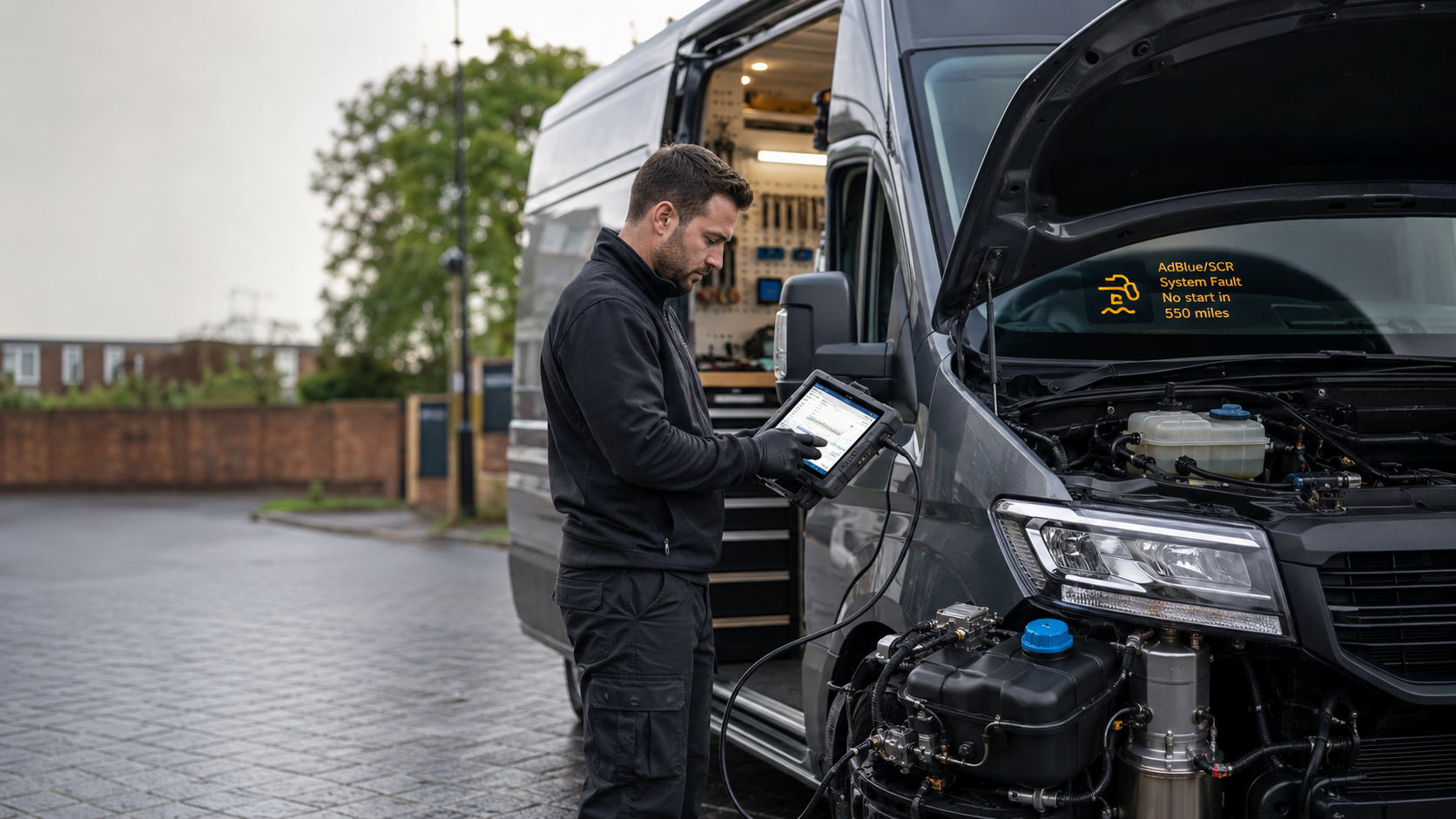

The dashboard’s flashing an AdBlue warning, there’s a countdown ticking down, and the van needs to be on the road tomorrow morning. That’s the moment most people grab their phone and type “AdBlue delete near me,” often from a lay-by. Understandable. But the nearest garage isn’t automatically the best one, and picking on distance alone is a common way to end up paying for the same job twice.
The specialist worth using is the one who can actually work out what’s wrong with the AdBlue or SCR system, explain your options honestly, and get the job right the first time. Not necessarily the one who gets back to you fastest. Below is what tends to separate a solid specialist from a rushed one, where repair and delete genuinely diverge as options, and what’s worth asking before anyone opens the bonnet.
What Does “AdBlue Delete Near Me” Actually Mean?
An AdBlue delete removes or disables the vehicle’s SCR system — Selective Catalytic Reduction, the setup that injects AdBlue fluid into the exhaust to reduce nitrogen oxide emissions. It’s usually a combination of physically removing components and reflashing the ECU software so the engine no longer expects the system to be there. People search “near me” because they want someone on-site with tools, not a phone quote from three counties away.
Here’s something worth knowing before booking anything: a delete isn’t automatically the right answer just because a warning light’s appeared. A good chunk of AdBlue faults come down to something far simpler, and a specialist who actually knows the job will tell you that rather than jumping straight to removal.
Why the Fault Needs Diagnosing First
A warning light tells you something’s wrong. It doesn’t tell you what, and that distinction matters more than most drivers assume. The SCR system has several parts working together, so one dashboard message can point to more than one possible cause.
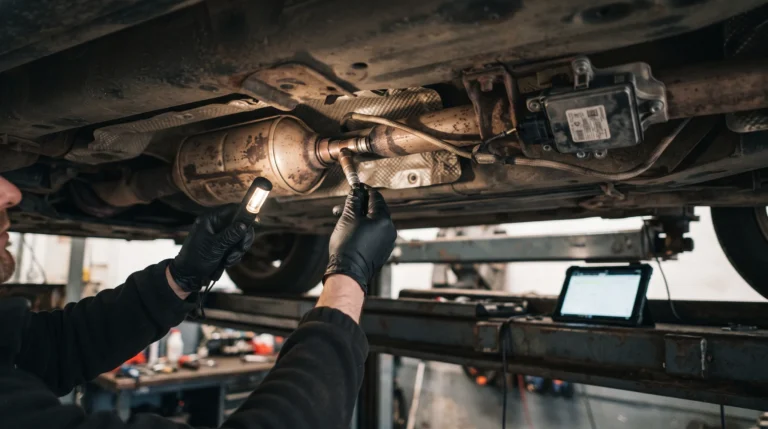
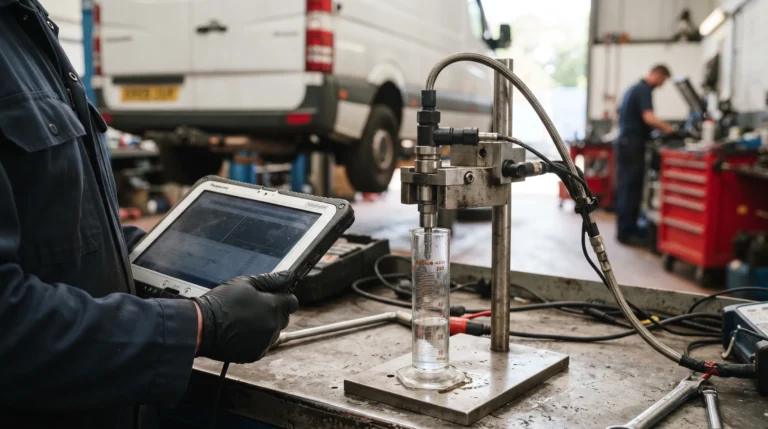
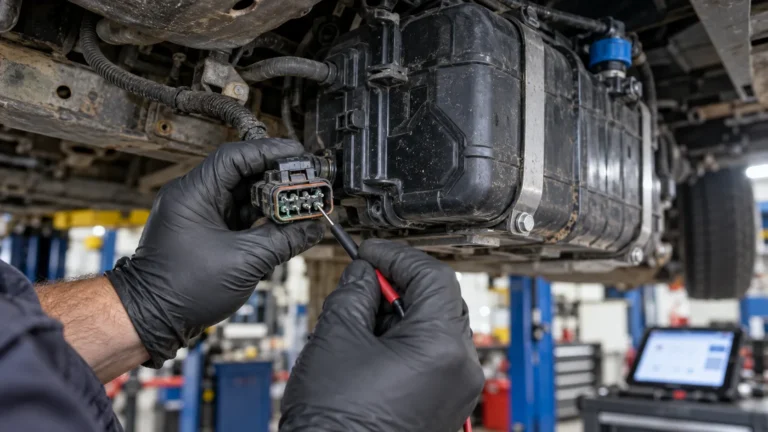
Proper diagnosis, before any repair-or-delete conversation even starts, usually involves pulling fault codes from the ECU, checking live readings from the NOx sensors (mounted in the exhaust, measuring emissions before and after the catalyst and one of the more failure-prone parts of the system), and inspecting the AdBlue pump, injector and tank sender for anything obviously faulty. Wiring and heater circuit issues get missed constantly, yet they cause a surprising share of AdBlue faults. Contaminated or crystallised fluid in the lines is another common culprit, particularly on vehicles that have sat unused for a while.
Skip that groundwork and jump straight to a delete, and you could end up paying to remove an entire system when a £40 sensor would’ve fixed it. A specialist who diagnoses before quoting is doing the job properly. One who prices a delete without popping the bonnet usually isn’t.
What to Look For in an AdBlue Specialist Near You
Start with the diagnostic kit. Ask what they’re actually using and whether it reads manufacturer-specific fault codes, not just generic OBD data. There’s a real gap between a basic scan and proper SCR diagnostics and it shows in how accurately the fault gets identified.
Mobile capability matters more than people realise until they need it. If the countdown’s hit zero or the vehicle’s gone into limp mode, driving it anywhere isn’t sensible. A mobile AdBlue specialist who’ll come to your driveway, depot, or the hard shoulder saves the cost and hassle of arranging recovery through city traffic.
Coverage across vehicle types tells you something too. SCR systems vary noticeably between manufacturers, so a specialist who’s worked across cars, vans and HGVs from several brands tends to spot manufacturer-specific quirks faster than someone who’s only ever touched one make.
It’s worth asking directly how much of their work is genuinely AdBlue and SCR focused. This isn’t a general mechanic’s bread and butter, it’s closer to a specialism and the answer usually separates people who do this daily from those who dabble occasionally.
Pricing should be broken down before work starts, not handed over as a surprise afterwards. Diagnostic cost, parts, labour all itemised. And whoever you choose should explain repair versus delete in plain terms, including what you’d be giving up either way, rather than steering you toward whichever pays them more.
Is a Mobile AdBlue Specialist Worth It in London?
For most drivers with an active fault, yes. Getting someone to diagnose on-site means you’re not driving a vehicle already throwing an emissions fault through heavy traffic and it’s often quicker than booking a workshop slot and waiting your turn.
It makes the most sense when the vehicle’s already in limp mode, when the countdown’s reached zero and it won’t restart, when you’re running a fleet and a van sitting idle anywhere in London is costing money by the hour, or when you simply want a second opinion without towing it across town.
Worth knowing upfront: not every mobile specialist carries every part on the van. Some jobs need a follow-up visit if a particular NOx sensor or pump needs ordering in. That’s not necessarily a bad sign — it’s just how the work goes sometimes but a decent specialist will tell you that before turning up, not after.
AdBlue Repair vs Delete: What’s the Actual Difference?
Repair means fixing whatever’s actually broken, a sensor, pump, injector, or a wiring fault and the emissions system carries on working as designed. Delete means taking the SCR system out of the equation entirely, through hardware changes and a software recalibration, so the vehicle no longer depends on AdBlue to run.
Neither one is the automatic right answer. It comes down to the vehicle in front of you, what’s actually wrong with it, how it gets used day to day, and what the owner actually needs from it going forward.
| AdBlue Repair | AdBlue Delete | |
| Fixes the underlying fault | Yes, directly | No, bypasses it instead |
| Emissions system stays active | Yes | No |
| Typical use case | Vehicle needs to stay road legal as is | Off-road, non-road or specific commercial use |
| Ongoing AdBlue fluid needed | Yes | No |
| Reversibility | N/A, original system remains | Depends on vehicle and method used |
A repair keeps the emissions system doing its job. A delete removes that dependency entirely, and that’s not a decision to make lightly given the legal implications covered below. Anyone worth using will talk you through both options rather than assuming you want a delete purely because that’s what you typed into Google.
Questions Worth Asking Before You Book a Delete
A few things worth getting answers to before committing:
- Will they diagnose first, or are they quoting blind?
- What does the job physically involve — hardware, software, or both?
- Have they worked on your specific make and model before?
- Can the work be done where the vehicle currently is, or does it need to go into a workshop?
- What happens if the diagnostic turns up something repairable instead?
- What are the legal and emissions implications for how you actually use the vehicle?
- Is there a guarantee on the work, and what does it actually cover?
- What’s genuinely included in the quote, versus what might get added later?
If someone answers all of that clearly, especially the legal question, that’s a good sign. If they skate past it, that’s worth noting too.
How Much Does an AdBlue Delete or Service Cost?
There’s no flat, universal figure here, and anyone quoting one before seeing the vehicle is guessing. Vehicle type plays a part in HGVs and larger vans tend to have more complex SCR setups than a standard car. Make and model matters as well; some systems are simply more time-consuming to work on than others. What the diagnostic actually finds changes the picture too. A straightforward sensor fault costs a lot less to fix than something buried deeper in the system.
Whether the job ends up being a repair (which might need parts) or a full delete (software plus hardware) shifts the price further, and mobile call-out versus workshop visit adds its own variable on top.
The sensible approach is a diagnostic fee upfront, followed by a proper itemised quote once the specialist knows exactly what they’re dealing with. If a number looks suspiciously low compared to everyone else’s, ask why. Cheap usually means something’s been skipped, diagnostics, genuine parts, or a full software job.
Signs You’re Dealing With an Unreliable Provider
A handful of red flags tend to turn up together with providers worth avoiding:
- Quoting a delete price over the phone with zero diagnostic and no eyes on the vehicle
- Dodging questions about what the work physically involves
- No mention at all of legal or emissions implications
- Vague answers when asked about experience with your specific vehicle
- Pressure to book immediately, before you’ve had a chance to ask anything
- No real pricing breakdown
- Flat refusal to even discuss repair as an alternative
One of these on its own might mean nothing. A few together is usually reason enough to keep looking.
Finding a Trusted AdBlue Specialist Near Me in London
Worth looking past whoever ranks first in search. Check for genuine signals of experience: clear, specific explanations of AdBlue and SCR systems on their own site rather than vague marketing copy, evidence they’ve worked across different vehicle types, and a mobile service that’s upfront about what it can and can’t handle on-site, wherever you happen to be across London.
A specialist based in or covering London who offers proper on-site diagnosis, explains repair and delete honestly, and is straightforward about pricing is generally a safer bet than whatever comes up cheapest in a five-minute search. If they can get to you at short notice, walk you through what the diagnostic actually showed, and give an honest answer on repair versus delete rather than pushing one option that’s usually someone who knows what they’re doing.
Ready to Get Your AdBlue Fault Looked At Properly?
Warning light on, countdown running down, or the vehicle already stuck in limp mode — the next move is a proper diagnostic, not a guess over the phone. Get in touch with a specialist covering London and the surrounding areas who’ll look at your specific fault, explain what’s actually going on, and talk you through repair and delete without steering you toward whichever suits them better. Have the make, model, year and the exact warning message ready when you call — it genuinely speeds things up.
Frequently Asked Questions About AdBlue Delete Near Me
Get clear answers about AdBlue delete, repair, diagnostics and finding a trusted mobile AdBlue specialist near you.
AdBlue delete means disabling the vehicle’s AdBlue/SCR emissions system through software changes and, where applicable, hardware modifications, so the vehicle no longer relies on the SCR system to operate. Disabling emissions controls can affect UK road-use and MOT compliance.
Usually, yes. A mobile AdBlue specialist can bring diagnostic equipment to your home, workplace or roadside location. This can be particularly useful when your vehicle is in limp mode or is not safe to drive to a workshop.
Look for a specialist who covers your area, diagnoses the fault before quoting, has experience with different vehicle makes and models, explains repair options clearly and is transparent about pricing and the legal side of disabling emissions systems.
The cost depends on the vehicle, make and model, and the work required. A proper quote should follow a diagnostic assessment rather than being based on a generic price before the specialist understands the fault.
Yes. Many AdBlue faults can be repaired while keeping the SCR system fully operational. Common causes include faulty NOx sensors, pumps, injectors, wiring, heaters and other SCR components, so proper diagnosis is important before deciding on a solution.
Yes. A suitably equipped mobile specialist can read SCR-specific fault codes, inspect live sensor data and carry out diagnostic checks at the vehicle. The exact level of testing depends on the vehicle and diagnostic equipment available.
AdBlue problems can affect diesel cars, vans and commercial vehicles fitted with an SCR system. Many major manufacturers use AdBlue technology, so the exact fault and repair requirements vary by make, model and engine.
Depending on the vehicle, an AdBlue countdown reaching zero can result in restricted engine operation or the vehicle refusing to restart. The exact behaviour varies between manufacturers, so an active countdown should be dealt with before it reaches zero.
Disabling or removing an emissions-control system can make a vehicle non-compliant with UK emissions and roadworthiness requirements. If the vehicle is used on public roads, the relevant legal and MOT requirements should be considered before disabling the SCR system.
It depends on the fault, vehicle and intended use. For road-going vehicles, repairing the underlying fault and keeping the emissions system operational is generally the appropriate option. A specialist should diagnose the vehicle first and explain the available options based on the findings.
A basic AdBlue diagnostic session can often take under an hour, although this varies depending on the vehicle and fault. A simple repair may be completed quickly, while more involved SCR faults can require additional testing or replacement parts.
Have your vehicle’s make, model and year ready, along with the exact warning message or AdBlue countdown, any known fault codes or recent repair history, and whether the vehicle is currently driveable. This helps the specialist prepare for the diagnostic visit.