
You top up the tank, clear the warning, and two days later it’s back. Or maybe it never went away at all. The AdBlue light just sat there glowing while the countdown to no-start quietly started ticking down. If you’ve been through this and the fault makes no logical sense given how full the tank is, there’s a good chance the actual problem isn’t the fluid at all. It’s the injector, and more specifically, it’s stuck shut.
We see this one a lot, especially on vehicles doing a lot of short, stop-start driving around London, the kind of driving pattern where the AdBlue system never really gets the chance to warm through properly. It’s a fiddly fault to explain to a customer over the phone because everything about the car still feels normal until, suddenly, it doesn’t. So let’s go through it properly: what a stuck-closed injector actually is, why it happens, how you can tell it apart from the half-dozen other AdBlue faults it gets confused with, and what fixing it actually involves.
First, What Is the AdBlue Injector Actually Doing?
Every modern diesel with an SCR (selective catalytic reduction) system relies on a small, precisely engineered nozzle to spray metered doses of AdBlue into the exhaust stream just ahead of the catalyst. Inside the exhaust, AdBlue reacts with NOx gases and breaks them down into nitrogen and water vapour which is the whole reason AdBlue systems exist in the first place, to keep diesel emissions within legal limits.
The injector itself works a bit like a tiny solenoid valve. When the ECU commands a dose, a small pintle inside the injector lifts, fluid sprays out in a controlled burst, and the pintle drops back down. It happens dozens of times during a normal drive, and most drivers never think about it once.
“Stuck closed” simply means that the pintle has stopped moving. The ECU sends the signal to open it, but nothing happens. No AdBlue goes anywhere near the exhaust. And because the system is built to notice exactly this kind of failure very quickly, it starts treating the situation the same way it would treat a genuinely empty tank with warnings, then a mileage countdown, then eventually a restricted restart.
Why Do AdBlue Injectors Stick Closed in the First Place?
There isn’t usually one single cause. It’s more often a combination of driving pattern, fluid quality and time.
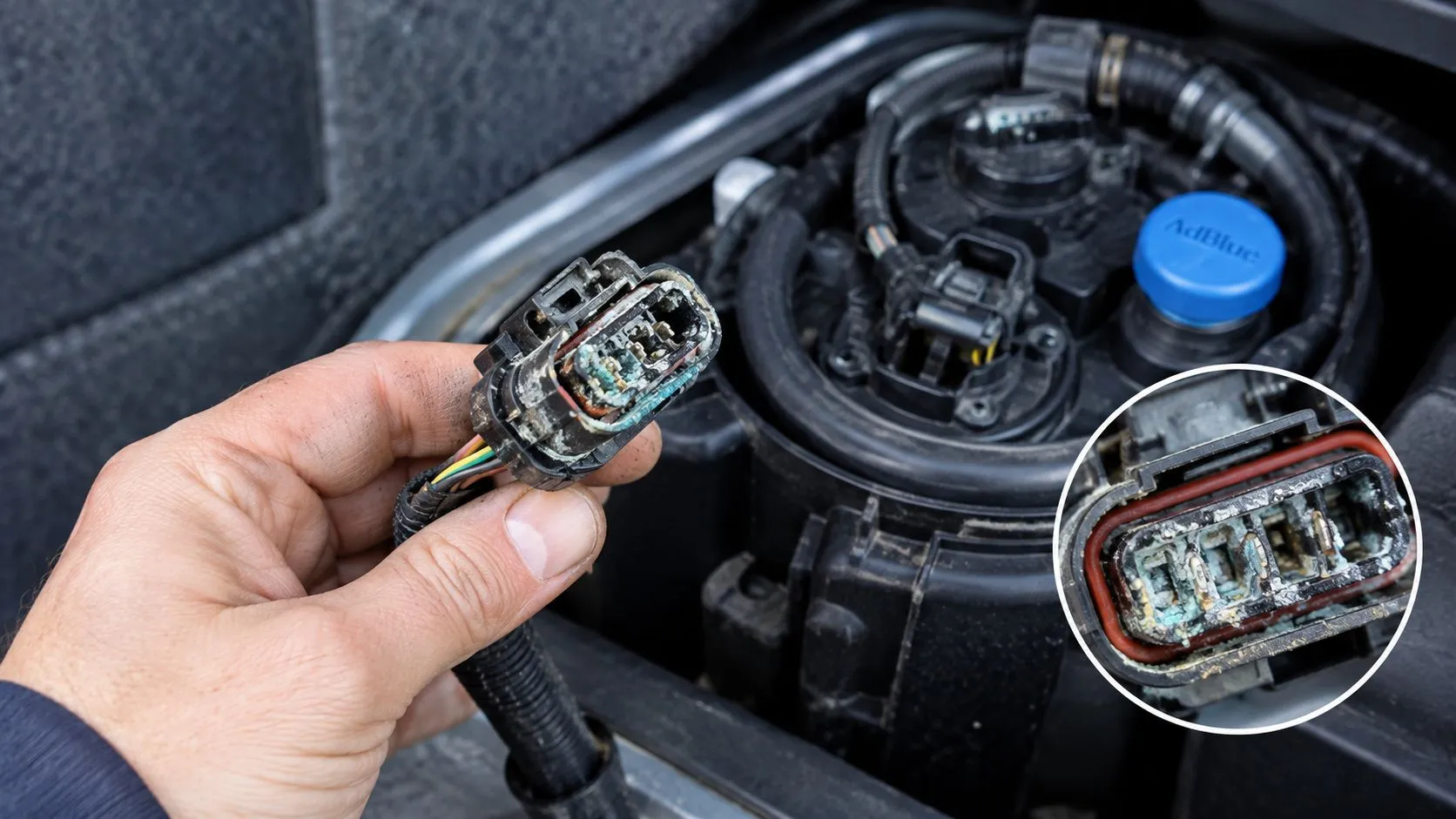
Crystallisation is the big one. AdBlue is a water-and-urea solution, and if it sits still anywhere warm including right inside the injector nozzle between dosing cycles the water evaporates and leaves urea crystals behind. Over time those crystals build up around the moving parts of the injector until the pintle simply can’t move anymore. This is by far the most common reason we find injectors stuck shut on the bench.
Short trips are a major contributing factor. A car that mostly does the school run, quick supermarket trips, or short hops around the city rarely gets hot enough for long enough to keep AdBlue moving cleanly through the system. Longer, steadier drives help keep things flushed through; short urban journeys don’t.
Poor-quality or contaminated AdBlue. Not all AdBlue on the market is created equal. Fluid that isn’t properly certified to ISO 22241, or that’s been left open, decanted badly, or stored somewhere it could pick up dust and debris, can introduce contamination that speeds up the whole crystallisation process.
A car sitting parked for a long stretch. If a vehicle is off the road for a few weeks maybe it’s a second car, or someone’s away AdBlue can sit completely static in the lines and injector with nothing to disturb it, which is close to ideal conditions for crystals to form.
Straightforward mechanical or electrical failure. Less often, there’s no crystallisation involved at all; the solenoid inside the injector has simply failed, electrically or mechanically, and it needs replacing regardless of fluid condition.
How Do You Know It’s the Injector and Not Something Else?
This is honestly the hardest part for most drivers, because AdBlue faults tend to look almost identical from the driver’s seat regardless of what’s actually gone wrong underneath. A few things tend to point specifically toward a stuck injector rather than, say, a sensor fault or a wiring issue:
The warning comes on with a completely full tank, and topping up again makes no difference whatsoever because the problem was never the amount of fluid available, it’s whether any of it is actually being used.
The mileage countdown, once it appears, tends to drop noticeably fast. That’s because a stuck-closed injector means zero dosing is happening, as opposed to a partially blocked injector which might still be dosing, just not enough. Zero is worse than reduced, and the system reacts accordingly.
Diagnostic scans tend to return a fault code specific to the dosing circuit or injector itself, rather than something more generic pointing at the tank, level sensor, or wiring loom.
And in some cases you’ll notice a drop in engine power or a “reduced performance” message well before the countdown actually hits zero, which is the car protecting its emissions compliance the only way it knows how.
If any of that rings a bell, it’s genuinely worth getting it looked at rather than guessing, because throwing money at the wrong part of a new sensor, a new tank, a new wiring harness is an easy and expensive mistake to make when the real fault is sitting inside the injector itself.
How We Actually Diagnose a Stuck Injector
We don’t like guessing on this one, because there’s real money at stake if the wrong part gets replaced. Our process usually looks like this:
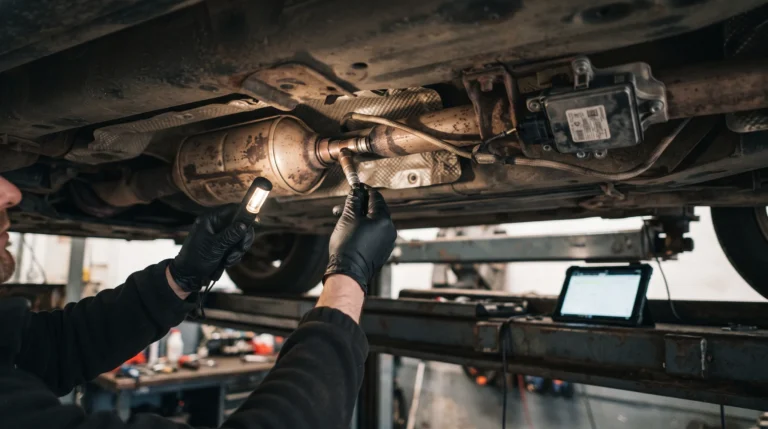
We start with a proper diagnostic scan using dealer-level equipment, which tells us whether the fault code is pointing specifically at the dosing module or injector circuit, rather than something further up or downstream in the system.
From there we run an active dosing test essentially commanding the injector to fire while watching whether any AdBlue is actually delivered. This is the single most reliable way to confirm a stuck-closed condition, because it removes any guesswork based on codes alone.
If the injector does turn out to be the culprit, we physically remove it and inspect the nozzle for visible crystallisation, which also tells us a lot about whether the supply line and tank need attention too, rather than just the injector on its own.
And because this fault so easily gets confused with others, we rule out the neighbours before committing to a repair path things like a fully blocked (as opposed to stuck-closed) injector, which behaves a little differently and which we cover in our guide on whether AdBlue crystallisation can be repaired; a failed heater element, covered in our AdBlue heater not working guide; and a quality sensor fault, which we break down against injector issues in NOx sensor vs AdBlue quality sensor. If you want the full picture of how fault codes map to specific problems, our AdBlue system fault codes explained page is a good companion read, as is our broader AdBlue fault guide.
What Does Fixing It Actually Involve?
The good news is that a stuck-closed injector doesn’t automatically mean a replacement part. What we do depends entirely on what we find once it’s off the vehicle.
Where crystallisation is the only issue, the injector can often be removed, professionally cleaned, and bench-tested to confirm the pintle is moving freely again before it goes back in. This is the cheaper and, frankly, more satisfying outcome: no new parts needed, just a proper clean and a confirmed fix.
Where the solenoid itself has failed mechanically or electrically, cleaning won’t help, and the injector needs replacing outright. There’s no way around that one.
And because crystallisation in the injector is rarely an isolated event, we usually check the supply line and tank strainer for the same buildup while we’re in there, so you’re not back in a few weeks with what looks like the same fault returning.
One thing we’d genuinely steer you away from: trying to force a stuck injector open yourself, or using anything abrasive to clean it. It’s a precision part, and forcing it tends to damage the pintle or seal, which turns a repairable fault into a replacement job unnecessarily. If you want a general sense of what repair costs look like across the AdBlue system as a whole, our system repair cost UK: what to expect guide covers that in more detail, and our AdBlue pump replacement cost UK page is useful if a pump issue turns out to be involved too.
For vehicles where injector or wider AdBlue repair genuinely isn’t viable, some drivers ask us about deletion instead we’ve written honestly about the trade-offs involved in our guide comparing AdBlue delete vs AdBlue repair and what that means for warranty and insurance, plus whether it carries long-term engine risk. We’d always recommend a proper repair where one’s realistic, but it’s worth knowing the full picture either way.
Can You Stop This Happening Again?
A few habits genuinely make a difference here, and none of them cost anything beyond a bit of awareness:
Stick to certified AdBlue, look for the ISO 22241 mark, and buy from a source you trust rather than the cheapest bottle on the shelf. Where you can, work in a longer drive now and then rather than exclusively short hops, since that gives the system the heat cycling it needs to keep things flushed through properly. Try not to leave a car standing unused for weeks at a time with AdBlue sitting in the tank and lines. And if the warning light does appear, don’t just keep topping up and hoping the earlier a crystallisation issue is caught, the more likely a clean resolves it rather than a full replacement.
Areas We Cover
We diagnose and repair stuck AdBlue injectors along with the full range of AdBlue, EGR, NOx sensor and urea system faults at our workshop and across a wide service area, including these regions:
London (Boroughs & Areas)
London · AdBlue Diagnosis London · AdBlue Reset London · AdBlue Countdown London · AdBlue Delete Near Me London · Westminster · Camden · Islington · Hackney · Tower Hamlets · Greenwich · Lewisham · Southwark · Wandsworth · Merton · Sutton · Kingston upon Thames · Richmond upon Thames · Hounslow · Ealing · Hammersmith & Fulham · Kensington & Chelsea · Brent · Harrow · Barnet · Enfield · Haringey · Waltham Forest · Redbridge · Newham · Barking & Dagenham · Havering · Bexley · Bromley · Hillingdon
South East England
South East England · St Albans · Slough · Sevenoaks · Dartford · Epsom · Esher · Loughton
Midlands
West Midlands · Staffordshire · Shropshire · Warwickshire · Solihull · Dudley · Wolverhampton · Walsall · Coventry · Stoke-on-Trent · Stafford · Cannock · Lichfield · Nuneaton · Rugby · Warwick · Leamington Spa · Stratford-upon-Avon · Telford · Shrewsbury · Oswestry · Bridgnorth
East Midlands & Lincolnshire
East Midlands & Lincolnshire · Grantham · Peterborough · Stamford · Spalding · Market Deeping · Bourne
See our full locations page for the complete list.
AdBlue Injector Stuck Closed FAQs
Get clear answers about stuck AdBlue injectors, crystallisation, dosing faults, repair options, warning lights, mileage countdowns and AdBlue system problems.
It means the injector’s internal pintle isn’t opening when the ECU commands it to, so no AdBlue is being dosed into the exhaust at all, usually because crystallisation has locked the valve shut.
Because the tank level was never the issue. A stuck injector means the fluid that’s already there isn’t being used, so refilling makes no difference to the fault.
Often faster than with a partially blocked injector. Zero dosing is treated more seriously by the system than reduced dosing, so the countdown tends to escalate quickly.
In a lot of crystallisation-only cases, yes. It can be removed, professionally cleaned, and bench-tested to confirm it’s moving freely again before going back in.
Heat combined with fluid sitting static in the nozzle, most commonly from short journeys that never let the system heat-cycle fully, is the leading cause.
Related, but not identical. A blocked injector restricts flow partially; a stuck-closed injector delivers none at all. We diagnose which one you’ve got before recommending a repair path.
Usually in the short term, yes, but the countdown to a restricted restart carries on regardless, so it’s not something to leave indefinitely.
It can contribute. Uncertified or poorly stored AdBlue can introduce contamination that speeds up crystallisation inside the injector.
It depends on whether cleaning resolves it or a full replacement injector is needed, and whether the supply line needs attention too. Our system repair cost UK guide has more detail.
Yes, particularly if prolonged non-dosing gets treated by the ECU as a broader emissions system failure rather than an isolated AdBlue issue.
Yes, AdBlue sitting static in the lines and injector for an extended period gives crystallisation more opportunity to set in than a car in regular use.
Use certified AdBlue, work in the occasional longer drive to keep the system properly heat-cycled, and avoid leaving the vehicle standing unused for long stretches with AdBlue still in the system.
Get It Checked Properly
If your AdBlue light has appeared despite a full tank, or the countdown seems to be dropping faster than it should, it’s worth having the injector properly diagnosed before anything gets replaced unnecessarily. We cover diagnosis and repair across London and its boroughs, the South East, the Midlands, Scotland, and the wider UK get in touch via our contact page to book a diagnostic check.