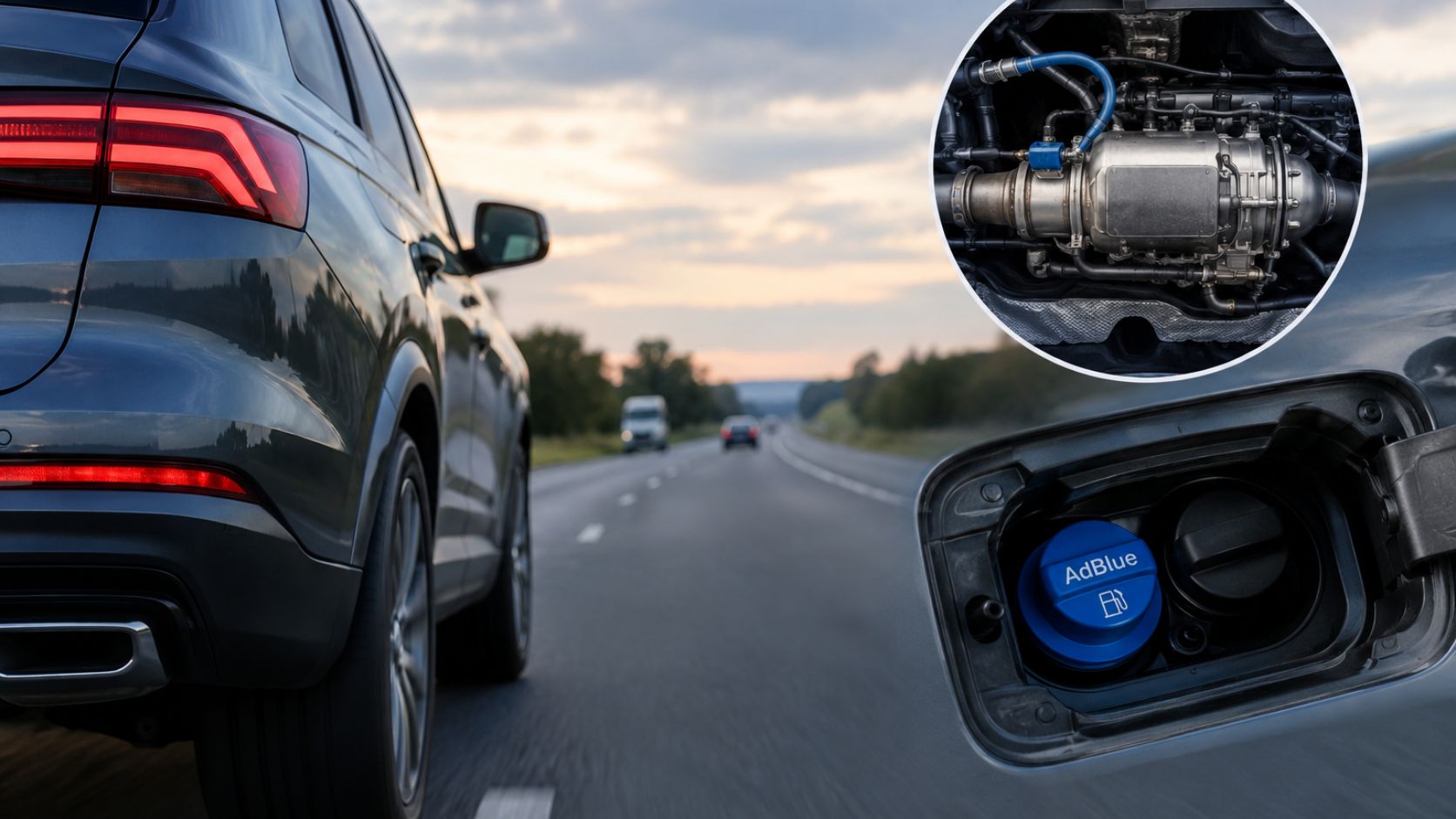

Here’s the pattern that actually explains this one. Most SCR systems don’t start dosing AdBlue the second you turn the key. They wait until the exhaust gas reaches a specific operating temperature, usually somewhere around 200 to 250 degrees Celsius at the dosing point, before the injector fires for the first time. On a typical drive, that threshold tends to get hit somewhere between 10 and 20 miles in, depending on your route, the weather, and how hard the engine’s working. So if a fault only shows up once you’re that far into a journey, the honest answer is that the system’s finally trying to do its job, and something’s stopping it.
This isn’t the same issue as a cold weather heater fault, which shows up regardless of distance the moment temperatures drop. This one’s distance and temperature triggered in a different way, tied to when dosing actually kicks in rather than when the fluid’s at risk of freezing. Here’s what’s actually going on, why it takes that long to show, and what usually needs fixing.
Why would a fault only appear partway through a drive, not at startup?
Because nothing’s actually being asked of the system at startup. The ECU knows the exhaust isn’t hot enough yet for dosing to make sense, so it holds off, and no dosing means no opportunity for a dosing related fault to surface. It’s only once the exhaust hits that operating temperature and the system attempts its first proper dose that a genuine problem gets exposed.
Short trips under that mileage often mask a fault completely, which is exactly why some drivers go weeks without a warning light and then suddenly start seeing one regularly once their routine changes to longer journeys, or the weather shifts and the threshold takes a bit longer to reach.
What’s actually causing it once the system does try to dose?
A handful of specific faults tend to sit behind this particular pattern.
A partially blocked or fouled dosing injector. Even a partial blockage can cope with a light initial dose attempt but fail to deliver consistently once the system asks for sustained dosing, which is exactly what starts happening once you’re properly up to temperature and driving normally.
A weak or failing AdBlue pump. The pump can sometimes build enough pressure for a brief moment but not sustain it, so a fault only registers once the system’s asking for continuous delivery rather than a single dose.
A NOx sensor giving inconsistent readings under load. Some sensors read fine at idle or low load but drift once the engine’s working properly at cruising speed, which is precisely the condition you’re in by the 10 to 20 mile mark on most journeys.
A quality sensor fault that only trips once fluid’s actually circulating. If AdBlue’s been sitting static in the lines, a marginal quality sensor can pass initial checks, then fail once fluid’s moving properly through the system during active dosing.
An intermittent wiring fault exposed by heat. Connectors and wiring near the exhaust and SCR components heat up and expand as the engine bay warms through a longer drive. A borderline connection that’s fine cold can open up slightly once everything’s properly hot, which is a genuinely common and easy to miss cause.
If you’re trying to work out which one applies to your car specifically, our breakdown of what AdBlue system fault codes actually mean and our full fault code guide are worth reading alongside this, since the stored code usually narrows it down considerably before a physical inspection’s even needed.
Does this mean my AdBlue heater’s fine, since it’s not a cold start issue?
Not necessarily, but it does point you toward a different part of the system first. If your fault only shows up on longer drives regardless of the weather, a heater problem is less likely to be the main cause, since heater faults tend to cluster specifically around cold starts and cold weather, clearing once things warm up rather than appearing once a journey stretches past a certain distance. That said, the two aren’t mutually exclusive, and it’s worth mentioning both patterns when you book in if you’re seeing any cold weather symptoms alongside this one.
What fault codes tend to come up with this pattern?
A few codes show up more often than others once dosing’s underway and something’s not right:
| Fault code | What it typically points to |
| P204F | Reductant injector circuit, often linked to a fouled or failing injector |
| P2047 | Reductant injector circuit low, commonly a pump or delivery pressure issue |
| P229F | NOx sensor circuit intermittent, frequently a heat related wiring or connector fault |
| P203A | AdBlue quality sensor performance, often only apparent once fluid’s actively circulating |
| P204B | Reductant pump performance, tends to show once sustained dosing is demanded |
If the code your car’s actually throwing isn’t one of these five, both our fault code pages linked above cover the wider range.
Is it safe to keep driving if it’s only happening on longer trips?
Generally yes in the short term, but it’s not something to just live with. Once the system logs that it can’t dose reliably, most vehicles start counting down toward reduced power or, eventually, a restart restriction, and that countdown doesn’t reset itself just because the fault only shows on longer journeys. Our guide on what happens once the countdown to engine restart starts explains exactly what that escalation looks like and roughly how much time you’re realistically working with.
How do you actually diagnose which part’s causing it?
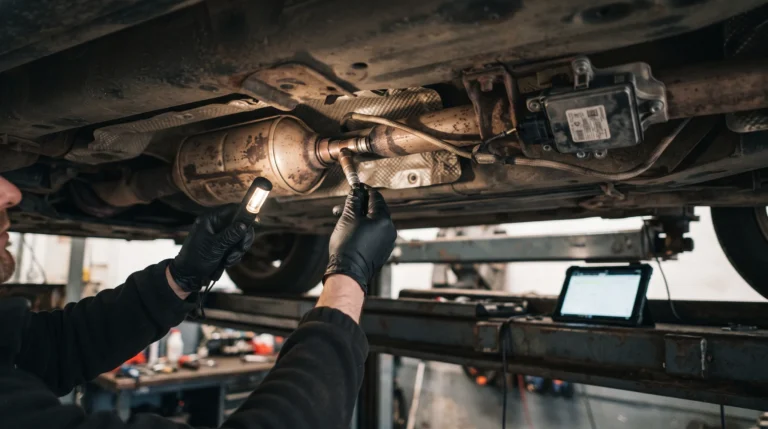
Given this fault only shows once the system’s properly up to temperature, static testing at idle often doesn’t reproduce it, which is exactly why a basic code read alone can be misleading. We connect diagnostic equipment and, where needed, take the vehicle on an actual road test to get the exhaust and SCR system into the same conditions where the fault occurs, then monitor live data from the pump, injector, NOx sensor and quality sensor while it’s happening rather than after the fact. That’s really the only reliable way to catch a fault that specifically depends on the system being fully warmed up and under genuine load.
What does the actual fix usually involve?
Depends entirely on what the road test and live data point to. A fouled injector or degraded pump is generally a component level repair or replacement. A wiring fault exposed by heat usually means tracing and repairing the specific connector or loom section once it’s been identified under the right conditions, rather than randomly replacing parts and hoping. A drifting sensor, whether NOx or quality, is typically a straightforward sensor replacement once confirmed.
Our AdBlue Repair service covers this kind of fault, starting from £249, a starting price rather than a flat fee, confirmed properly once we know exactly what’s actually failing. If the fault’s already logged codes that need clearing once the physical repair’s done, our AdBlue Reset service handles that separately, and if you’d rather get it properly diagnosed first before committing to any repair, our AdBlue Diagnosis service does exactly that on its own.
For a general sense of what repairs like this run to, our repair cost guide and our specific pump replacement cost breakdown are both worth a look before booking anything in.
Is there any point using an AdBlue bypass instead of fixing this properly?
Some owners do ask, particularly on older vehicles where a full injector or pump replacement feels like a lot to spend on a car that’s not worth much. We offer advice and support for suitable vehicles where a bypass is being considered, with legal requirements and the vehicle’s intended use taken into account, through our AdBlue Bypass service. Our comparison of AdBlue delete against AdBlue repair covers that decision more fully, and we’ll tell you honestly which route actually makes sense for your specific car rather than pushing one option.
Does this show up more on certain makes?
We see this pattern across most SCR equipped diesels, but a few brands come up more often, usually down to injector design or how the wiring loom’s routed near the exhaust. Our brand pages cover the more common patterns for Volkswagen, including our VW warning light after refill guide, Audi and our Audi AdBlue system fault breakdown, BMW, Mercedes and our piece on why the Mercedes AdBlue light keeps coming back on, Ford alongside our Ford Transit P20EE fault guide, Vauxhall, Peugeot with our separate Peugeot AdBlue fault page, Citroën, Jaguar and Land Rover, if you want anything specific to what you’re actually driving. Our vehicles hub page has the full list if your make isn’t mentioned by name here.
Our wider AdBlue fault guide is also worth a read if this has been an ongoing pattern rather than a one off, since it covers how the different fault types relate to each other beyond just this specific distance triggered issue. If the fault has already escalated to a countdown warning specifically, our dedicated AdBlue countdown page for London covers that stage on its own.
Where We Help
We cover AdBlue diagnosis and repair right across London, including Lambeth, Kingston upon Thames, Kensington and Chelsea, Islington, Hounslow, Hillingdon, Richmond upon Thames, Hammersmith and Fulham, Greenwich, Enfield, Ealing, Camden, Merton, Wandsworth, Barnet, Southwark, Sutton, Tower Hamlets, Westminster, Newham, Lewisham, Waltham Forest, Redbridge, Bromley, Bexley, Brent, Harrow, Haringey, Hackney, Barking and Dagenham and Havering, alongside our main London AdBlue repair page and our full locations page if you want to check coverage beyond what’s listed here.
Outside London, we also cover Leeds, Sheffield, Glasgow and Edinburgh directly.
The South East England region covers Dartford, Sevenoaks, Epsom, Esher, Slough, St Albans and Loughton individually.
The East Midlands and Lincolnshire area covers Peterborough, Bourne, Grantham, Spalding, Stamford and Market Deeping individually.
The West Midlands covers Wolverhampton, Walsall, Dudley, Solihull and Coventry individually.
Staffordshire covers Stoke-on-Trent, Stafford, Cannock and Lichfield individually.
Warwickshire covers Nuneaton, Rugby, Warwick, Leamington Spa and Stratford-upon-Avon individually.
And Shropshire covers Telford, Shrewsbury, Oswestry and Bridgnorth individually. Whichever town or borough you’re in, the regional hub page links through to the specific one covering you if it isn’t listed by name above.
AdBlue Fault After 10 to 20 Miles FAQs
Get clear answers about AdBlue faults that appear after 10 to 20 miles, dosing faults, diagnostic checks, repair costs, warning lights and AdBlue system problems.
Because the SCR system doesn’t attempt to dose AdBlue until the exhaust reaches a specific operating temperature, usually reached somewhere in that 10 to 20 mile range on a typical journey. Until that point, no dosing means no chance for a dosing fault to appear, so the light shows up right when the system actually starts trying to do its job.
It’s worth ruling out, but a genuinely consistent pattern across multiple drives, same rough mileage each time, points strongly to a temperature triggered cause rather than coincidence. If it’s happening every time you cross that threshold, it’s worth taking seriously rather than dismissing.
Yes, to a degree. Faster, more sustained driving gets the exhaust up to temperature quicker than lots of stopping and starting, so the same underlying fault might show at 10 miles on a motorway run and closer to 20 on a stop start city route.
Not reliably, no. Since the fault depends on the system being properly warmed up and actively dosing, testing at idle in a stationary bay often won’t reproduce it, which is why a proper diagnosis for this pattern usually needs live data captured during an actual road test.
Not usually. Heater faults tend to be tied to cold weather and cold starts specifically, whereas a distance triggered fault like this is linked to when dosing activates, which happens regardless of temperature outside once the exhaust itself is hot enough.
Depending on what’s actually found, a sensor replacement costs considerably less than an injector or pump repair. Our AdBlue Repair service starts from £249, a starting price rather than a flat fee, confirmed once we know what’s actually wrong.
Technically you might avoid triggering the warning that way, but you’re not fixing anything, just avoiding the conditions that expose it. The underlying fault’s still there, and it’ll surface again the next time you do a longer drive, or eventually on its own regardless.
Yes, if it’s left unaddressed. Once the system logs that it can’t dose reliably, most vehicles begin a countdown toward reduced power, and some will eventually restrict restarting once the engine’s switched off.
Possible, but less likely if it’s a consistent pattern tied specifically to distance rather than random. A proper diagnostic read of the stored codes usually clarifies quickly whether it’s genuinely dosing related or something else entirely.
It can happen year round, since it’s tied to how long it takes the exhaust to reach operating temperature rather than ambient weather specifically, though a cold winter morning can genuinely push that threshold a bit further out.
That pattern often points toward an intermittent cause, like a wiring connection that only opens up once things get properly hot, or a sensor giving borderline readings that don’t fail consistently every single time.
Not reliably. Since this fault needs the system under genuine load and at temperature to reproduce, it needs live data monitoring during a road test rather than a basic static code read, which is exactly what specialist AdBlue diagnosis is set up to capture.
Possibly, depending on the vehicle’s age and specific warranty terms, since it’s a genuine component fault rather than anything caused by how the car’s been used. Worth checking with your manufacturer or dealer first if the car’s still covered.
Be specific about the pattern, roughly how many miles in it tends to show, whether it’s consistent across different drives, and any fault codes already logged if you’ve had it scanned. That detail speeds up getting to an accurate diagnosis considerably.
Get it looked at properly rather than just avoiding longer drives to dodge the warning. The pattern itself, appearing consistently around the same mileage, is a useful clue, but confirming the actual cause needs a proper road test diagnosis rather than guesswork.
Book Your AdBlue Diagnosis
If your AdBlue fault is following this kind of distance related pattern, get in touch through our contact page with your vehicle’s make, model, postcode and roughly how far into a drive it tends to appear, and we’ll get you booked in. You can also read more about us or browse our wider blog if you’re still comparing options before committing to a repair.