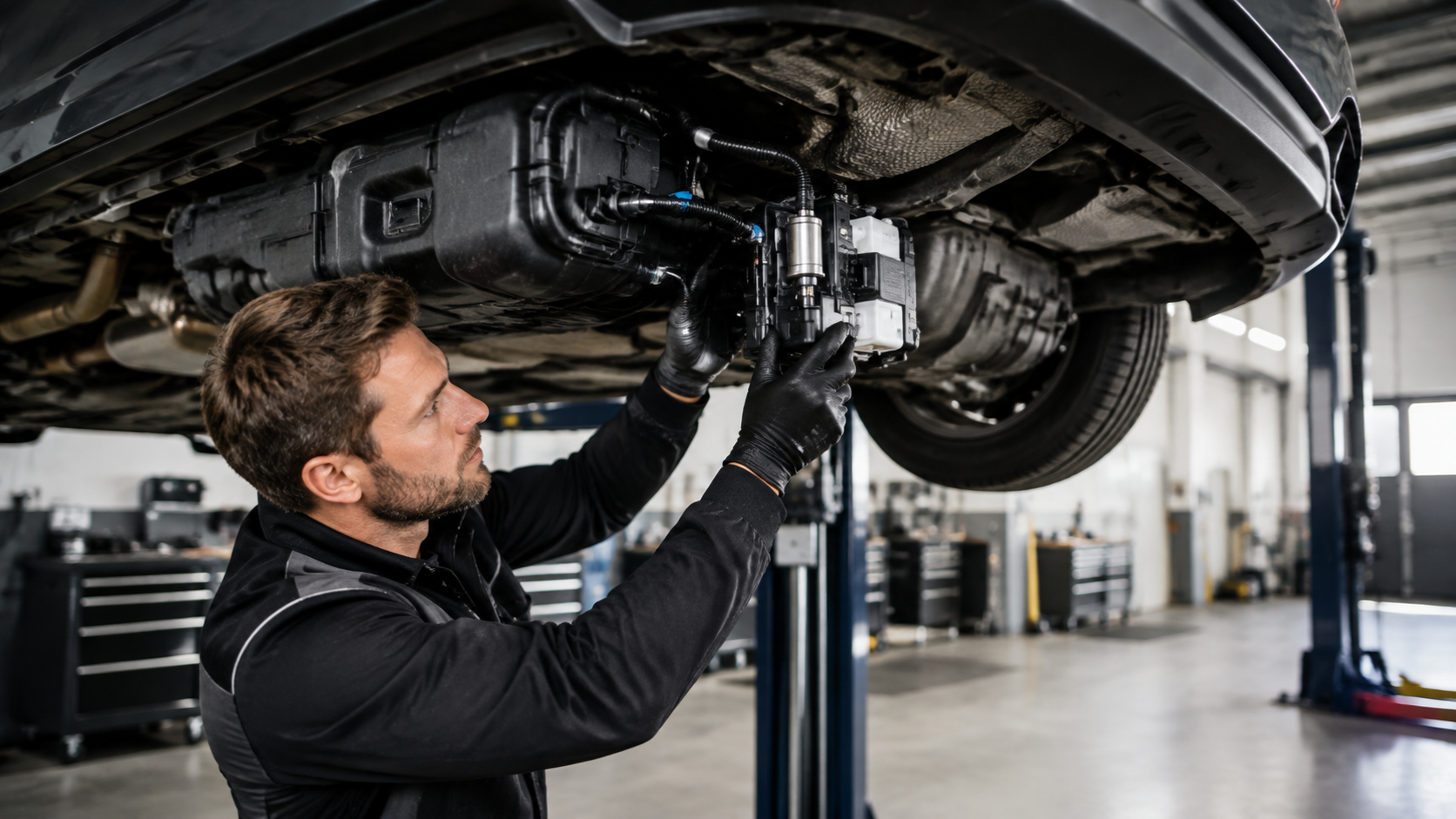

AdBlue pump replacement costs in the UK typically range from £400 to £800 for most vehicles. At a main dealer, the cost of an AdBlue pump replacement is often quoted at £1,000 to £1,800, depending on the vehicle, whether OEM parts are used, and the labour time involved. The wide range exists because the AdBlue pump on many modern diesel vehicles is not a standalone component it is integrated into a combined tank module that includes the pump, heater, level sensor, and quality sensor as a single unit. On these vehicles, what looks like a pump fault can only be resolved by replacing the entire module, which significantly affects cost. This guide covers what an AdBlue pump actually is, what causes it to fail, what the replacement costs across common makes, and when a delete is the more economical decision.
What an AdBlue Pump Is and Why It Fails
The AdBlue pump is the component that draws fluid from the AdBlue tank and delivers it under pressure to the SCR injector, which then sprays it into the exhaust stream in controlled quantities. Without a functioning pump, no AdBlue reaches the SCR catalyst the NOx reduction process stops, and the vehicle’s ECU detects this through the downstream NOx sensor and generates a system fault.
Pump failures are among the most common and most misdiagnosed AdBlue system faults in the UK. An AdBlue fault code does not directly confirm which component is responsible. P20EE, for example, means “SCR catalyst efficiency below threshold” but the cause could be a failed downstream NOx sensor giving inaccurate readings, an underperforming AdBlue injector, or a pump that is not delivering the correct fluid quantity.
This distinction matters enormously for cost. If you replace the SCR catalyst the most expensive hardware fix and the real problem was a faulty NOx sensor, you have spent over £1,500 unnecessarily. A proper diagnostic scan with live data analysis, not just fault code reading, is the only way to confirm the pump is the actual cause before committing to replacement.
Why AdBlue pumps fail
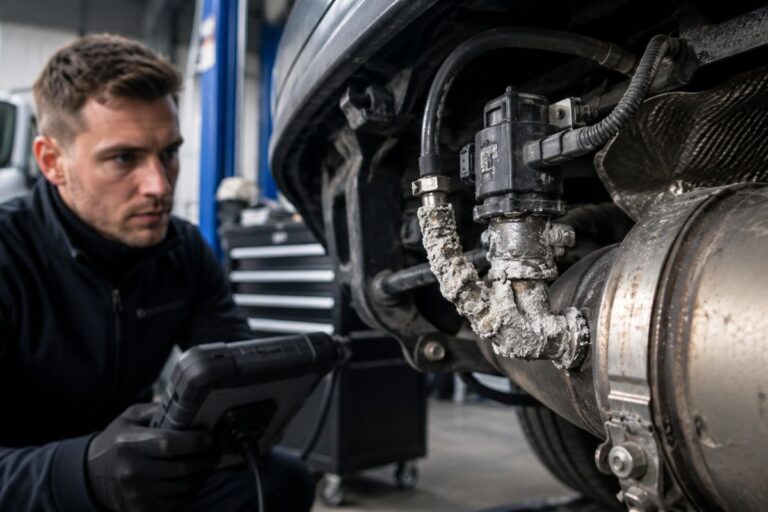
Crystallisation: AdBlue freezes at –11°C. The heater stops it freezing in winter. When the element fails, you get false low-level warnings and SCR faults on cold mornings very common on Transits and Sprinters. Crystallised AdBlue blocks the pump’s internal passages and causes the motor to run against resistance.
Running the tank dry repeatedly: Pump motors are designed to operate with fluid as both coolant and lubricant. Running the AdBlue tank to empty consistently causes the pump to run dry, accelerating wear on internal seals and bearings. Repeated dry-running is one of the most consistent causes of premature pump failure on high-mileage commercial vans.
Electrical failure: The pump motor can fail electrically either an open circuit, a short to ground, or internal winding failure. This produces fault codes P20BA or P20B9 (reductant pump control circuit) and is confirmed by testing pump current draw and voltage under live operating conditions.
Wiring and connector faults: On older vehicles where the wiring loom has aged or been disturbed during previous work, connector corrosion between the pump and ECU can mimic pump failure. This is worth ruling out before committing to a module replacement connector faults are a £100–£200 repair, not a £700–£1,500 one.
Contaminated fluid: AdBlue that has been diluted, contaminated, or allowed to degrade damages the pump’s internal components over time. A pump that has been exposed to incorrect fluid may fail before its expected service life.
ADDITIONAL CONTENT: If you’re simply due a fluid refill rather than dealing with a fault, our mobile AdBlue top-up service covers the same coverage area and can often be booked same-day.
AdBlue Pump Replacement Cost UK Breakdown by Route
The route you take for replacement significantly affects what you pay. Here is how the costs compare across the most common options:
| Replacement route | Typical cost range | Notes |
| Main dealer OEM pump module | £900–£1,800 | Highest cost; OEM parts, manufacturer labour rates |
| Independent specialist OEM parts | £500–£900 | Qualified specialist, genuine parts, lower labour rates |
| Independent specialist quality aftermarket | £400–£700 | Reputable aftermarket part; cost saving without compromising quality significantly |
| Remanufactured pump module | £300–£600 | Specialist remanufactured unit; savings of up to 70% on OEM pricing are achievable through remanufactured AdBlue pump units |
| Mobile specialist | £400–£800 | Same repair scope as independent specialist; no recovery cost, no garage wait |
| AdBlue delete (alternative to repair) | See pricing page | Permanent software solution; no pump replacement required |
Cost by Vehicle Make
Pump replacement cost varies by make because the module design, part cost, and labour time differ significantly between manufacturers.
| Vehicle make | Typical pump/module replacement cost | Notes |
| BMW 3 and 5 Series diesel | £600–£1,100 | BMW AdBlue pump replacement at the higher end of the £500–£800 range for the module; coding required after replacement |
| Mercedes-Benz C and E Class | £600–£1,200 | Mercedes pump module replacement at the upper end; SCR-specific Mercedes coding required after fitting |
| Volkswagen Group (VW, Audi, SEAT, Skoda) | £500–£950 | Module pricing varies by model; VW T6 AdBlue tank/module parts alone can reach £594 + VAT from OEM |
| Ford Transit and Ranger | £400–£750 | Ford pump replacement at the more accessible end of the price range; common fault on Transit diesel range |
| Peugeot Boxer / Citroën Relay | £400–£700 | Peugeot pump replacement typically in the £400–£600 range; crystallisation is the most common cause on these vans |
| Mercedes Sprinter / Vito | £550–£1,000 | Commercial van range; integrated module design; common fault on high-mileage examples |
| Renault Trafic / Master | £450–£800 | PSA platform-derived; similar pricing to Peugeot/Citroën on the module |
What the Pump Replacement Cost Actually Covers
When an installer quotes you for AdBlue pump replacement, the cost should cover:
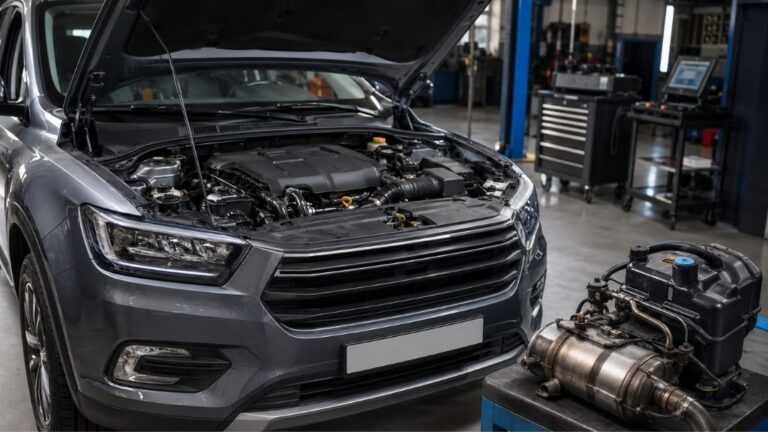
The pump module itself. On most modern diesel vehicles, the pump is not a standalone component it is part of a combined assembly that includes the heater, level sensor, and quality sensor. Some vehicles use integrated tank units that include sensors, heaters, and pumps. If one part fails, the recommended repair can be the full assembly. This is why a pump fault often produces a module-level quote rather than a pump-only price.
Labour. Pump module removal requires draining the AdBlue tank, disconnecting the electrical connections and fluid delivery lines, removing the module from the tank, fitting the replacement, and refilling with fresh fluid. Labour time typically runs two to three hours depending on accessibility.
ECU coding and reset. On most vehicles, the replacement module needs to be coded to the vehicle’s ECU and the fault codes cleared before the system will resume normal operation. This is a step that requires professional diagnostic equipment and is included in a proper repair it is not optional.
Post-repair diagnostic confirmation. A correctly completed pump replacement should include a post-installation diagnostic check confirming the pump is delivering fluid at the correct pressure and rate, and that the fault codes have cleared without returning. If this step is not carried out, the repair cannot be confirmed as successful before you drive away.
What Is Not Covered in a Pump Replacement
Understanding what the pump replacement quote does not cover helps avoid unexpected additional costs:
Root cause investigation. If the pump failed due to crystallisation, contaminated fluid, or repeated dry-running, simply replacing the pump without addressing the cause means the replacement pump may fail in the same way. A thorough repair should address why the pump failed, not just replace the failed component.
Associated damage. If the pump failure has been present for some time, the injector nozzle may have crystallised (see our crystallisation repair guide), and the SCR catalyst may have developed its own efficiency code. These are separate issues with separate costs and should be assessed and quoted individually rather than discovered mid-repair.
NOx sensor condition. The pump fault codes can mask or co-exist with NOx sensor faults. A post-replacement diagnostic that still shows reduced catalyst efficiency may indicate a NOx sensor issue that was not visible until the pump was restored to function.
Should You Repair or Delete?
This is the question most people arrive at after seeing the pump replacement cost. The answer is not the same for every vehicle or situation.
The software delete typically makes more commercial sense when the fault requires SCR catalyst replacement, pump replacement on an integrated tank/pump platform, or multiple components failing in sequence on a high-mileage vehicle.
Repair makes sense when:
- The pump fault is a first-time failure on a vehicle with reasonable remaining life
- The rest of the AdBlue system is confirmed healthy no other fault codes, no catalyst efficiency issues
- The vehicle is under warranty or will be sold through a route where system integrity matters
- The vehicle is relatively new and the repair cost is proportionate to its value
Delete makes more sense when:
- The same pump fault has recurred after a previous replacement indicating a systemic issue rather than a one-off failure
- Multiple fault codes are active simultaneously alongside the pump fault
- The combined repair cost is approaching £600–£1,500 and the vehicle’s operating profile high mileage, short urban runs makes recurring failure likely
- You are a commercial operator and downtime for repeat repairs is the bigger cost
Our AdBlue delete vs repair guide covers the full decision framework including the legal considerations for both options.
Why Diagnosis Must Come Before Pump Replacement
Many customers are stung because even if replacing a part say an injector or pump does not cure the fault, the garage still charges for labour and part. The industry norm is to charge for whatever was attempted, even if it did not solve the issue. A garage may try one fix, then another, until the light disappears temporarily.
This is avoidable. A diagnostic session that includes live data actual NOx values, pump pressure readings, fluid delivery rate, injector operation costs significantly less than a component replacement and tells you with confidence whether the pump is the cause rather than the consequence of the fault.
We carry out a full diagnostic before recommending any repair. We do not replace components speculatively. Contact us with your vehicle details and the fault codes showing we will advise on the most likely cause before arranging a visit.
ADDITIONAL CONTENT: For faults beyond the pump itself injectors, NOx sensors, or the SCR catalyst our AdBlue system repair service covers the full range of components under one mobile visit.
How Our Mobile Service Works
We diagnose and repair AdBlue pump faults as a mobile service. We come to you at your home, workplace, or roadside across our full coverage area. No recovery costs, no garage wait, no lost working day for commercial operators.
Our mobile service includes full live-data diagnostic, pump module inspection and testing, replacement where confirmed necessary, and post-repair confirmation before we leave.
All AdBlue repair and urea repair services are available mobile. For commercial vehicles and HGVs where downtime cost is the primary concern, see our HGV remapping and AdBlue solutions page.
Areas We Cover
- AdBlue pump replacement London
- AdBlue pump replacement Slough
- AdBlue pump replacement Esher
- AdBlue pump replacement Epsom
- AdBlue pump replacement Loughton
- AdBlue pump replacement St Albans
- AdBlue pump replacement Sevenoaks
- AdBlue pump replacement Dartford
- AdBlue pump replacement Bourne
- AdBlue pump replacement Grantham
- AdBlue pump replacement Market Deeping
- AdBlue pump replacement Peterborough
- AdBlue pump replacement Stamford
- AdBlue pump replacement Spadling
- AdBlue pump replacement Glassgow
- AdBlue pump replacement Sheffield
- AdBlue pump replacement Edinburgh
- AdBlue pump replacement Leeds
- AdBlue pump replacement Shropshire
- AdBlue pump replacement Staffordshire
Not listed? See our full locations page or contact us with your postcode.
AdBlue Pump Replacement FAQs
Straight answers on AdBlue pump replacement costs, fault codes, repair options and mobile diagnosis.
AdBlue pump replacement typically costs around £400–£800 through an independent specialist. Main dealer prices can be £1,000–£1,800 depending on the vehicle, OEM parts and labour rates. The final cost depends on whether the pump is a standalone component or part of an integrated AdBlue tank module. See our pricing page for more information.
On many modern diesel vehicles, the AdBlue pump is integrated into a larger tank module containing components such as the pump motor, heater and sensors. This can mean replacing the complete module rather than only the pump motor. Labour can also include tank access, module removal, ECU coding and post-repair diagnostics, which increases the overall cost.
P20BA and P20B9 are commonly associated with AdBlue pump control faults. Codes such as P20EE and P204F can also appear when the reductant system is not operating correctly, but these codes can have several possible causes, including NOx sensor, injector or SCR catalyst problems. A live-data diagnostic is needed to confirm whether the pump is actually at fault. See our AdBlue fault codes guide for more detail.
For a first-time pump failure on an otherwise healthy vehicle, repair is usually the sensible starting point. If the vehicle has multiple SCR faults, an expensive integrated tank module or significant mileage, the repair-versus-delete decision may be different. Our AdBlue delete vs repair guide explains the options and relevant legal considerations.
Sometimes. Early-stage AdBlue crystallisation around the pump inlet or delivery passages may be removable through professional cleaning. However, cleaning will not repair an electrically failed pump or internal damage caused by severe crystallisation. A diagnostic assessment can establish whether cleaning is appropriate or whether the pump or module needs replacement. See our AdBlue crystallisation guide for more information.
AdBlue pump replacement commonly takes around 2–3 hours, although the exact time varies by vehicle. The job can involve draining the tank, removing the failed module, installing the replacement, refilling the system, carrying out ECU coding and completing a post-repair diagnostic check.
Yes. We provide mobile AdBlue diagnosis and pump replacement across London, Slough, Esher, Epsom, Loughton, St Albans, Sevenoaks, Dartford and surrounding areas. Visit our locations page to see our coverage, or contact us with your postcode and vehicle details.
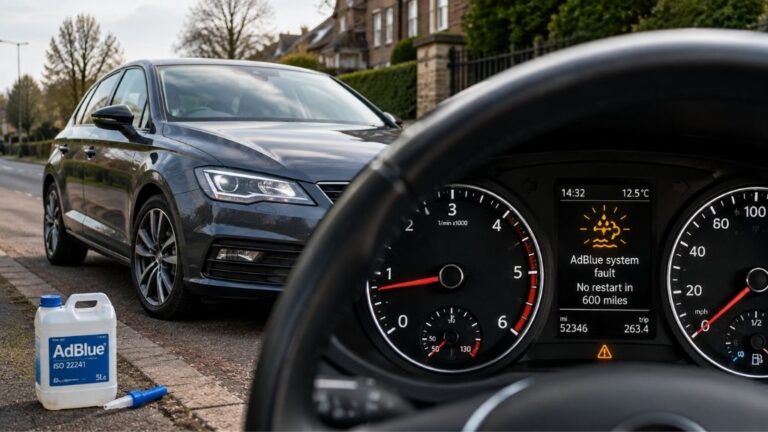
Yes. A confirmed AdBlue or SCR fault can trigger a vehicle countdown that eventually leads to a no-restart condition if the underlying problem is not resolved. This can happen even when there is still enough AdBlue in the tank. Prompt diagnosis is important because simply clearing the warning does not repair the failed component or necessarily stop the countdown.
Book Mobile AdBlue Pump Diagnosis
If you have an AdBlue pump fault code, a warning light that will not clear, or a vehicle approaching its no-restart countdown, we carry out same-day and next-day mobile diagnosis across London and the surrounding area.
Contact us today with your vehicle make, model, year, and any fault codes already showing. We will confirm availability, advise on the most likely cause based on your specific vehicle, and give you a fixed-price quote for diagnosis and repair or delete before any work begins.
ADDITIONAL CONTENT: Not sure your postcode is covered? Check our full locations page, which lists every town and city we currently service.