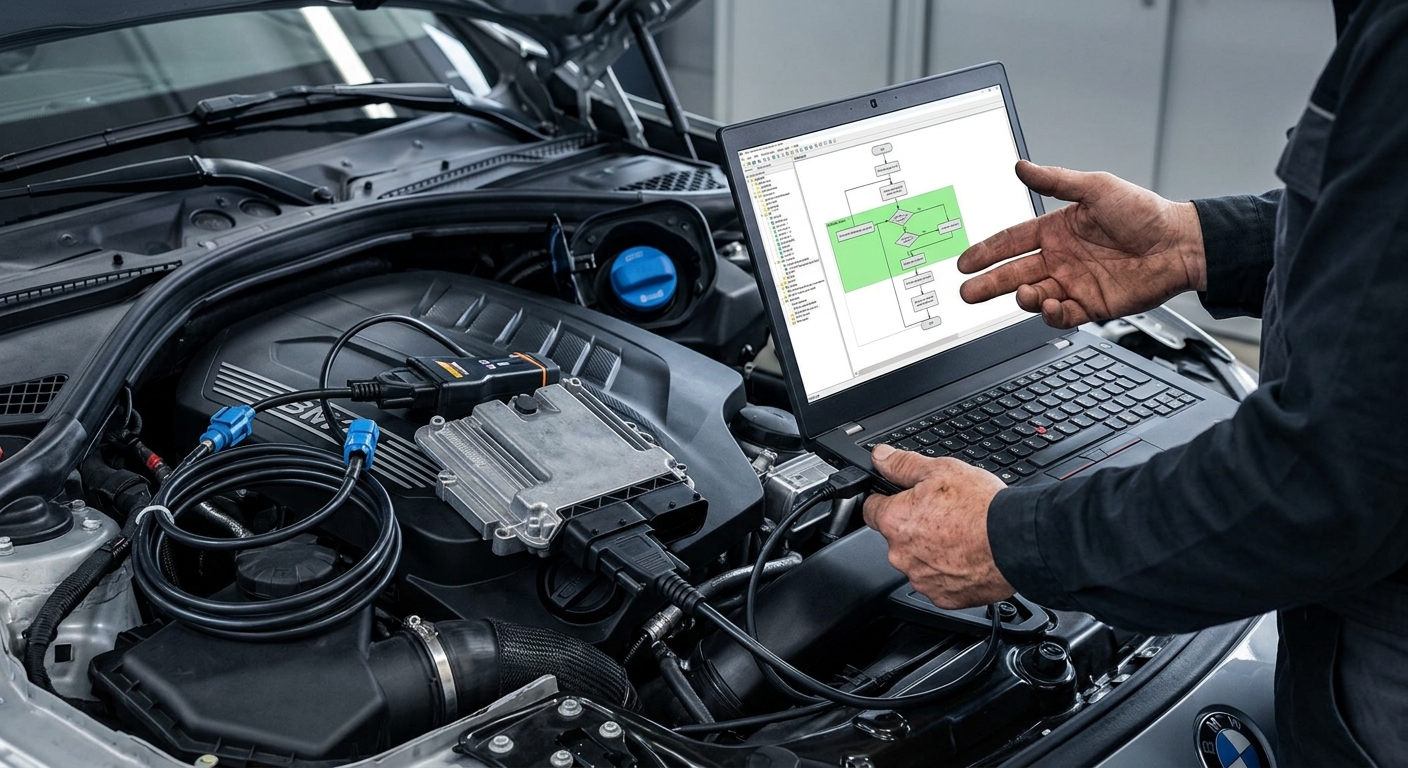

An AdBlue delete works by reprogramming the vehicle’s ECU the engine control unit to remove the software logic that monitors, requires, and enforces the AdBlue SCR (Selective Catalytic Reduction) system. After a delete, the ECU no longer looks for AdBlue fluid, no longer monitors the pump, injector, or NOx sensors, and no longer generates fault codes or warning lights related to the system. The physical hardware tank, pump, injector remains in place. Nothing is removed. What changes is the software that runs the system. This guide explains exactly how that process works, what happens in the ECU, how it differs from a bypass, and what you need to understand before deciding whether it is the right option for your vehicle.
What an AdBlue Delete Is and What It Is Not
The word “delete” is slightly misleading, because nothing is physically deleted or removed. A more accurate description is an AdBlue ECU remap a modification to the engine management software that instructs the ECU to behave as if the SCR system does not exist.
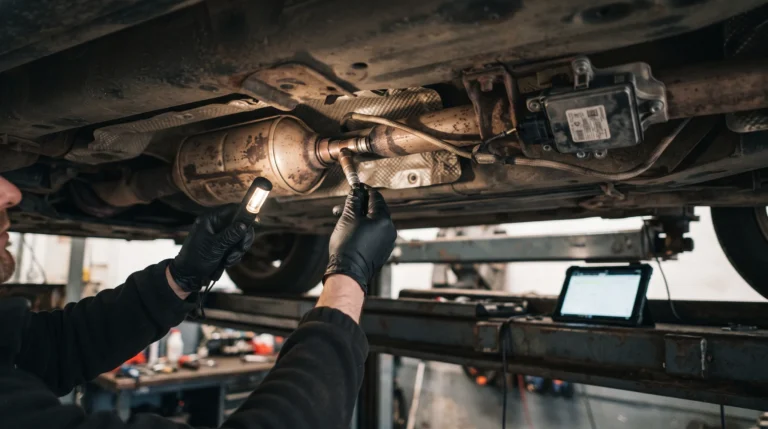
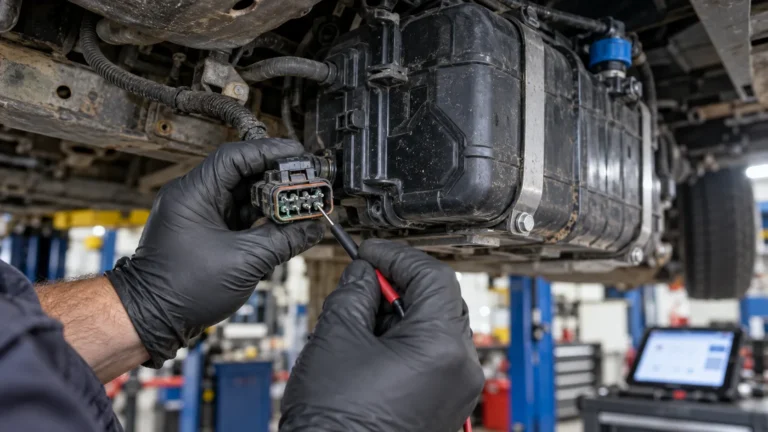
The AdBlue tank remains in the vehicle. The pump, injector, NOx sensors, and wiring all remain connected. From the outside, the engine bay looks identical before and after a delete. What has changed is the software running inside the ECU specifically, the section of code that governs how the engine management system interacts with the SCR emissions control system.
This is different from a physical removal, which some operators consider but which creates additional complexity around wiring, EVAP connections, and sensor inputs that the ECU would otherwise expect to see. A software delete is cleaner, faster, and more reversible the original software map can be restored if needed.
What the ECU Does With AdBlue Before a Delete
To understand what a delete changes, it helps to understand what the ECU is doing with the AdBlue system in normal operation.
The SCR system is managed by the ECU through a continuous cycle of monitoring and control:
Monitoring: The ECU receives live data from multiple sensors the AdBlue level sensor in the tank, the AdBlue quality sensor, the upstream NOx sensor before the SCR catalyst, and the downstream NOx sensor after the catalyst. It also monitors the AdBlue pump current and the injector operation.
Calculating demand: Based on engine operating conditions load, speed, exhaust temperature, NOx output the ECU calculates how much AdBlue the injector should spray into the exhaust stream at any given moment to achieve the target NOx reduction.
Enforcing compliance: The ECU compares what the downstream NOx sensor reports with what it expects given the amount of AdBlue injected. If the reduction is insufficient, it stores a fault code. If the AdBlue level drops below a threshold, it generates a warning. If the tank empties completely, it activates the countdown to a no-restart lockout.
All of this logic the monitoring, the calculations, the enforcement lives in the ECU software. A delete addresses all of it at the software level.
What Happens During the Delete Process
The physical process of an AdBlue delete involves connecting a professional ECU programming tool to the vehicle’s OBD (On-Board Diagnostics) port the same port used for fault code reading and communicating with the ECU to read, modify, and rewrite the software map.
Here is the sequence in more detail:
Step 1 ECU identification The programming tool identifies the specific ECU fitted to the vehicle its make, model, hardware version, and current software version. This matters because the delete software must be written specifically for that ECU configuration. Generic delete files applied to the wrong ECU version produce unreliable results at best and ECU damage at worst.
Step 2 Reading the existing ECU map The current ECU software is read from the ECU and saved. This is a critical step the original map is the baseline from which the modified map is produced, and it is what allows the modification to be reversed if needed. A specialist who does not read and save the original map before modifying it is skipping a step that matters.
Step 3 Producing the delete map The specialist either applies a pre-validated delete solution for that specific ECU configuration or produces one from the read ECU data. The modification involves identifying and altering the sections of ECU code that govern SCR monitoring, AdBlue demand calculation, fault code generation, and the no-restart enforcement logic replacing them with code that instructs the ECU to bypass these functions entirely.
system interacts with the engine management system including the NOx sensor data that feeds into fuelling and timing calculations in some vehicles, and the interaction between the AdBlue system and other emissions-related systems such as the EGR.
Step 4 Writing the modified map The modified software is written back to the ECU via the OBD port.
This is not a generic on/off switch. A properly executed delete accounts for all the points at which the SCR system interacts with the engine management system including the NOx sensor data that feeds into fuelling and timing calculations in some vehicles, and the interaction between the AdBlue system and other emissions-related systems such as the EGR.
Step 4 Writing the modified map The modified software is written back to the ECU via the OBD port. The writing process must be completed without interruption a failed write partway through can corrupt the ECU and require specialist recovery. This is one of the reasons the process is carried out by specialists using professional-grade programming tools rather than consumer OBD readers.
Step 5 Post-modification verification Once the new map is written, existing fault codes are cleared and the system is tested. The key verifications are that no AdBlue-related warning lights are active, no fault codes return after clearing, the engine starts and runs normally, and no other ECU systems have been inadvertently affected by the modification.
What the ECU Does Differently After a Delete
After a properly executed delete, the ECU’s behaviour changes in several specific ways:
No AdBlue monitoring: The ECU no longer reads or responds to signals from the AdBlue level sensor, quality sensor, pump, or injector. These components remain physically connected, but their signals are ignored at the software level.
No NOx enforcement: The ECU no longer compares upstream and downstream NOx sensor readings to evaluate SCR catalyst efficiency. The downstream NOx sensor may still be read depending on the specific delete implementation but the SCR efficiency calculation and associated fault code logic is disabled.
No warning lights: AdBlue level warnings, system fault warnings, and countdown messages no longer appear. The dashboard is clear of AdBlue-related indicators regardless of how much or how little fluid is in the tank.
No no-restart lockout: The mechanism that prevents engine restart when the AdBlue tank is empty is removed. The vehicle starts and runs normally regardless of AdBlue level.
No AdBlue injection: Because the ECU is no longer calculating AdBlue demand, it no longer sends injection commands to the AdBlue injector. The injector receives no instruction and does not operate.
Fuelling and timing: On a correctly produced delete, the engine’s fuelling and ignition timing are adjusted to account for the absence of active NOx reduction. This is important a delete that simply disables the AdBlue monitoring without adjusting the fuel and timing maps to compensate may produce drivability issues or suboptimal performance.
How This Differs From an AdBlue Bypass or Emulator
The terms delete, bypass, and emulator are sometimes used interchangeably, but they refer to different approaches:
| Approach | What it does | How it works |
| AdBlue delete | Removes SCR logic from ECU software | ECU remap software only |
| AdBlue bypass | Fools the ECU into accepting false sensor signals | Hardware device feeding artificial signals to the ECU |
| AdBlue emulator | Hardware device simulating SCR sensor outputs | Plug-in module generating signals the ECU expects |
An AdBlue bypass or emulator works by intercepting the signals between the SCR sensors and the ECU and replacing them with artificial signals that tell the ECU everything is functioning normally even when the AdBlue tank is empty or the system is non-functional. The ECU is not modified; it is deceived.
An AdBlue delete modifies the ECU software so it no longer needs those sensor signals at all. Rather than fooling the ECU into thinking the system is working, the delete tells the ECU the system is not there to monitor.
In practice, a software delete tends to be more stable than a hardware emulator, because there is no hardware device to fail, no connectors to corrode, and no risk of the emulator producing inconsistent signals that trigger fault codes. It is also less detectable by diagnostic scanning, since the ECU itself has been reprogrammed rather than having an external device attached that may be identified.
The urea delete is the same process applied to vehicles where the system is described as a urea system rather than AdBlue typically some Peugeot, Citroën, and PSA Group vehicles. The technical process is identical; the terminology differs by manufacturer.
What a Delete Addresses That Repair Does Not
Understanding why some people choose delete over repair requires understanding what a delete actually solves that individual component replacement cannot.
Recurring faults: If the AdBlue pump has been replaced and the same fault has returned, or if multiple components have been repaired in sequence, the underlying cause often the vehicle’s operating profile, crystallisation cycles, or a systemic issue with the SCR system has not been resolved. A delete removes the system from the equation entirely rather than continuing to repair it.
Multiple simultaneous fault codes: A vehicle showing P20EE, P20BA, and P2201 simultaneously has three separate fault conditions. Repairing each individually involves multiple component replacements at cumulative cost. A delete addresses all three at once, because after the delete, none of the associated monitoring logic is active.
Cascade faults: Some AdBlue faults produce cascade effects where one failing component causes incorrect signals that produce apparent faults in other, otherwise healthy components. A delete resolves the cascade by removing the source of the monitoring chain, rather than requiring each apparent fault to be investigated and cleared individually.
For a full comparison of when delete is the more rational choice and when repair is better, see our AdBlue delete vs repair guide.
What a Delete Does Not Do
Being clear about the boundaries of what a delete achieves is important:
It does not remove physical hardware. The AdBlue tank, pump, injector, and sensors remain. The tank can be left empty, drained, or left as-is it no longer affects vehicle operation either way.
It does not affect other fault codes. A delete resolves AdBlue and SCR-related fault codes and warning lights. Unrelated fault codes DPF faults, EGR faults, other engine management faults are separate and are not addressed by the delete. These require their own diagnosis and resolution. If your vehicle also has DPF or EGR faults, see our EGR solutions pages.
It does not guarantee MOT pass. The standard MOT emissions test checks CO and hydrocarbon levels, not NOx specifically and most deleted vehicles pass MOT without issue in practice. However, a vehicle’s emissions system has been modified, which is relevant to MOT tester discretion and to the broader legal position described below.
It is not a performance remap. A delete is not the same as a power or economy remap. Fuelling and timing adjustments in a delete file are made to maintain normal operation after removal of the SCR system not to increase power or fuel economy. A separate remap can be combined with a delete if performance improvement is also a goal, but the two are distinct services.
The Legal Position
This is the part of the explanation that is most often absent from technical descriptions of how a delete works and it is the most important context for anyone making a decision.
The Road Vehicles (Construction and Use) Regulations 1986 make it an offence to use a vehicle on a public road that has been modified to emit more pollutants than its type approval permits. An AdBlue delete removes the SCR system that reduces NOx emissions the vehicle will emit more NOx than its certified type approval allows. Using a deleted vehicle on a public road is technically an offence under these regulations.
At the same time, carrying out an AdBlue delete as a workshop service is not itself illegal it is a modification that a specialist can lawfully perform. The legal exposure is in the use of the vehicle on public roads after modification.
In practice, enforcement against individual drivers for this type of modification is rare in the UK. MOT tests do not currently check NOx specifically in the test cycle, and most deleted vehicles pass without issue. But the legal position is real, and anyone considering a delete should understand it rather than discover it later.
Insurance implications are also relevant some insurers treat undeclared modifications as grounds for voiding a policy or limiting a claim. Checking your policy and declaring the modification where required is the appropriate step.
What to Expect From a Professional Mobile Delete
We carry out AdBlue deletes as a mobile service at your home, workplace, or roadside. The process typically takes one to two hours and involves no recovery, no garage wait, and no downtime beyond the appointment itself.
The process we follow for every delete:
- Full diagnostic scan to confirm the active fault codes and identify any non-AdBlue faults that need separate attention
- ECU identification and original map read and save
- Production or application of a validated delete solution specific to your ECU version
- Write of the modified map to the ECU
- Post-modification diagnostic scan confirming no AdBlue fault codes remain and no other ECU systems have been affected
- Verbal confirmation of what the delete covers and what it does not, including the legal position
We do not proceed with a delete without reading and saving the original map, and we do not use generic solutions applied without reference to your specific ECU version. Both of these are non-negotiable steps in a properly executed delete.
For current pricing on delete services across our vehicle range, For the comparison between delete and repair including how to decide which is right for your specific situation see our AdBlue delete vs repair guide.
Book a Mobile AdBlue Delete
If you have an AdBlue fault that has not responded to repair, or if you want to understand whether a delete is the right option for your vehicle, we carry out same-day and next-day mobile diagnosis and delete across London and the surrounding area.
Contact us today with your vehicle make, model, year, and any fault codes already showing. We will confirm availability, advise on whether delete or repair is the appropriate route, and provide a fixed-price quote before any work begins.
Frequently Asked Questions
How does an AdBlue delete work? –
Does an AdBlue delete remove the physical hardware? +
What is the difference between an AdBlue delete and an AdBlue bypass? +
Will an AdBlue delete clear all the warning lights? +
Is an AdBlue delete reversible? +
How long does an AdBlue delete take? +
Does an AdBlue delete work on vans and HGVs? +
Areas We Cover
Same-day and next-day mobile AdBlue diagnosis and delete — we come to your home, workplace, or roadside.
Shropshire
Warwickshire
Staffordshire
West Midlands
Other Regions & Cities