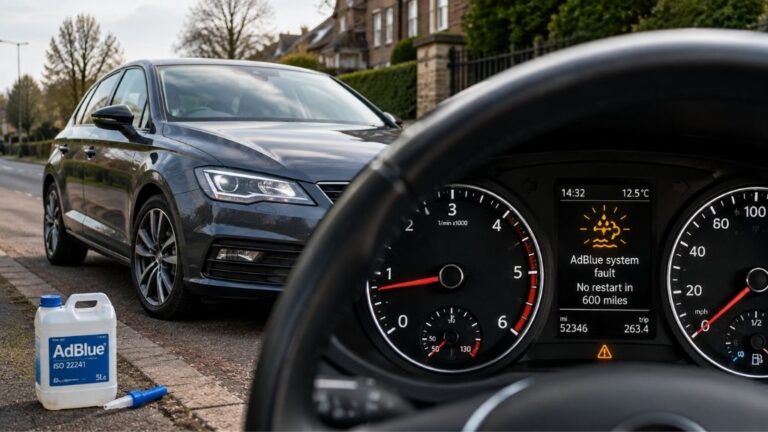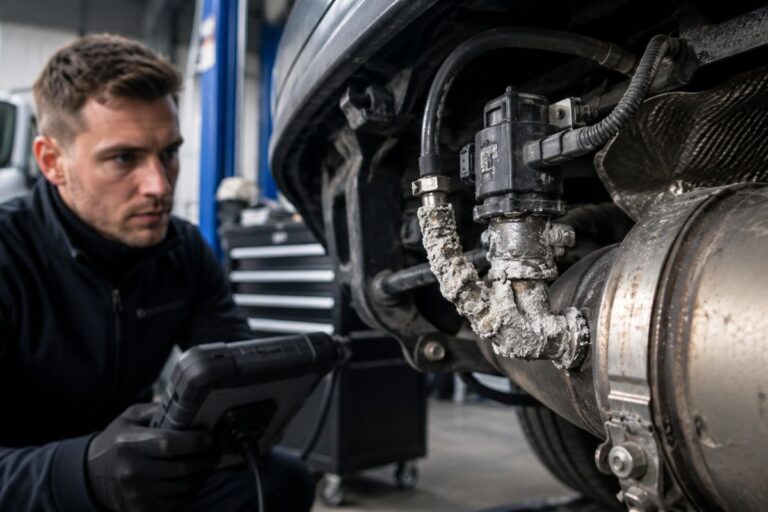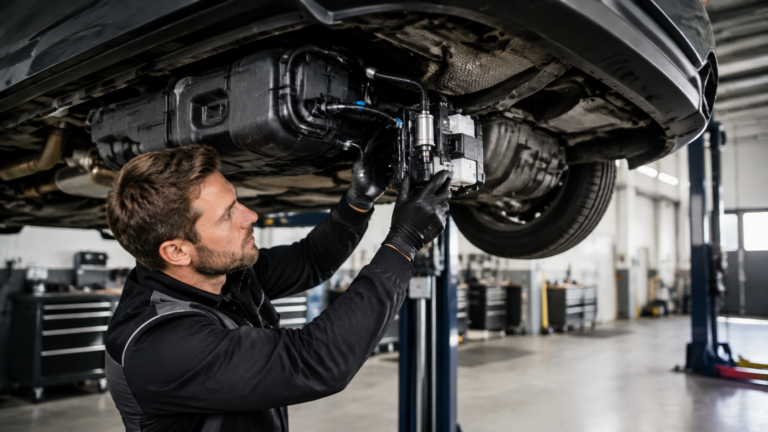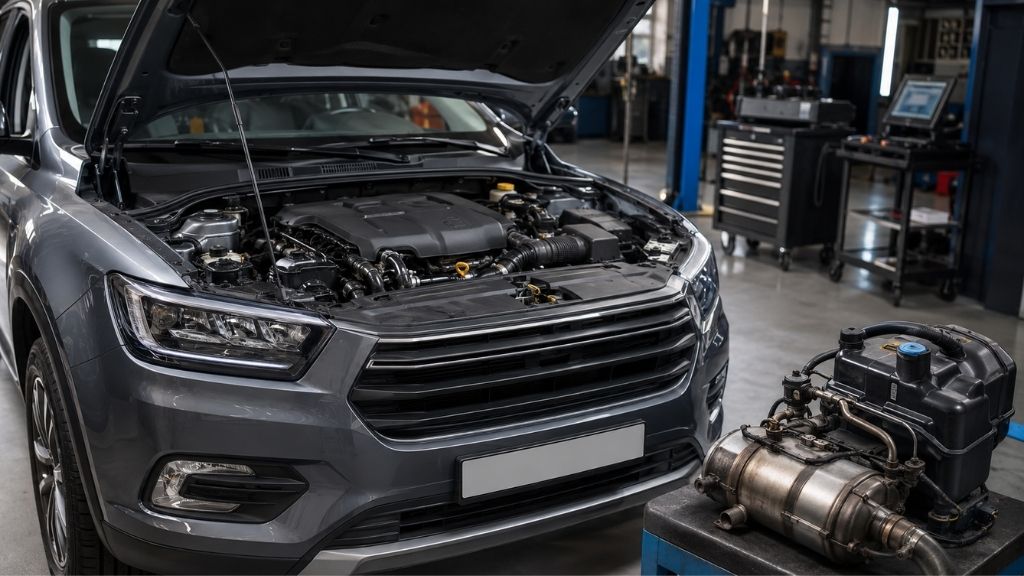

Done properly, an AdBlue delete doesn’t damage the engine. It removes the AdBlue and SCR emissions strategy from the ECU, not anything the engine actually needs to run on, so the engine carries on doing exactly what it did before. Where damage genuinely happens, it’s almost always down to how the delete was carried out, not the idea of deleting AdBlue in the first place.
That’s the honest, short version. But if you’re actually trying to decide this for your own vehicle, one line probably isn’t going to cut it. So let’s go through what a delete really changes under the bonnet, where the genuine risks sit, what separates a bad delete from a proper one, and a few things genuinely worth knowing before you commit either way.
What Does an AdBlue Delete Actually Change?
AdBlue gets dosed into the exhaust as part of the SCR system, and its whole job is cutting NOx emissions after they’ve already left the engine. It’s what’s called an aftertreatment process. It happens downstream of combustion, not inside it. The engine’s fuelling, timing, turbo control, all the stuff that actually makes the engine run, has nothing to do with the AdBlue system whatsoever.
An AdBlue delete removes that SCR strategy from the ECU software, stopping the dosing cycle and clearing whatever fault codes and countdowns came with the failing system. It doesn’t touch fuelling maps. Doesn’t change how the engine builds power. Doesn’t affect oil pressure, cooling, or anything mechanical happening inside the block itself. Every time you turn the key afterward, physically, nothing about the engine’s changed.
So Where Does the “Engine Damage” Worry Actually Come From?
Fair question, worth answering properly rather than brushing past it.
Most of the horror stories doing the rounds online trace back to poorly executed deletes, not the process itself when it’s done right. A rushed or badly written software edit can leave the ECU genuinely confused, throwing up unrelated fault codes, causing rough running, and in rarer cases affecting how the engine management system reads sensors it was never meant to touch at all. That’s not the AdBlue delete causing damage. That’s a bad job causing damage, and honestly, it’d happen with any poorly executed ECU remap, whether AdBlue was involved or not.
There’s a separate issue too, one that gets lumped in with engine damage but isn’t quite the same thing. NOx sensors and exhaust components can, in some cases, behave slightly differently once the SCR system’s no longer active, since the whole point of SCR is managing what comes out the tailpipe. That’s not engine damage in the mechanical sense. It’s a change to the exhaust aftertreatment side of things, and it’s worth thinking about separately rather than folding it into the engine question.
What a Properly Done AdBlue Delete Actually Involves
The gap between a delete that causes problems and one that doesn’t comes down almost entirely to how it’s carried out. A proper job means reading the original ECU file, finding the specific SCR and AdBlue strategy within it, and rewriting just that section cleanly, leaving everything else in the mapping completely untouched. Done this way, there’s nothing left in the software to clash with engine management, fuelling, or anything else the ECU’s controlling.
That’s quite different from the cheaper, generic “AdBlue delete” tools sold online, which slap on a blanket edit without accounting for the specific vehicle, engine variant, or existing ECU file. Those generic tools are where most of the real problems come from, not the concept of an AdBlue delete itself. It’s really the same distinction you’d make with any specialist mechanical work. A properly diagnosed AdBlue repair carried out by someone who actually knows what they’re doing produces a completely different result to a rushed, generic fix, even though both are technically addressing the same fault on paper.
Does an AdBlue Delete Void Your Warranty?
Yes, typically, if the vehicle’s still within its manufacturer warranty period. Any ECU software change, AdBlue-related or not, generally sits outside what a manufacturer will cover, so that’s worth factoring in if your car’s still relatively new. It’s a separate issue from engine damage, but a genuinely important one, and it’s part of why a delete tends to make more sense on older or higher-mileage vehicles already out of warranty, rather than something you’d do to a newer car still under cover.
Is an AdBlue Delete Legal in the UK?
Worth being straight about this rather than glossing over it. Disabling the emissions control system on a vehicle used on public roads isn’t legal in the UK, since it takes the vehicle outside its type-approval emissions standard. A car with AdBlue deleted is likely to fail its MOT under current emissions testing, and driving it afterward can carry legal and insurance implications that are worth knowing about before you decide anything.
Where a delete’s more commonly and legitimately used is on vehicles being run off-road, on private land, in motorsport, or ahead of export to a market with different emissions rules. If you’re weighing this up, it’s genuinely worth having an honest conversation with a specialist about your specific situation, rather than assuming it’s a simple swap for a struggling AdBlue system on a car you’re planning to keep driving normally on public roads.
AdBlue Delete vs Repairing the Fault Instead
Given all that, it’s worth asking whether a delete’s actually the right move for you, or whether fixing the underlying fault makes more sense.
If your AdBlue system’s throwing a fault because of one failed part, a blocked injector, a faulty sensor, a pump on its way out, a straightforward AdBlue fix or full AdBlue repair sorts the actual problem and keeps the vehicle road legal and compliant, with the SCR system working exactly as it was designed to. That’s usually the better route for anyone driving normally on public roads, particularly if the car’s still within warranty or due an MOT soon.
Where a delete tends to make more sense is on older, high-mileage vehicles with recurring AdBlue faults that keep costing money to keep fixing, or on vehicles genuinely used off-road, on private land, or heading for export. For anyone wanting the AdBlue system disconnected without the full legal weight of a delete, AdBlue removal and AdBlue bypass are worth discussing too, since which option’s right genuinely depends on the vehicle, its history, and what you’re actually planning to do with it going forward.
What About NOx Sensors After a Delete?
Given how closely the NOx sensors and AdBlue system are linked, it’s a fair thing to ask about. In most properly executed deletes, NOx sensor fault codes get addressed as part of the same software work, since leaving them active would just hand you a fresh set of warning lights even after the SCR strategy’s been removed. If you’re dealing with NOx sensor issues specifically, whether alongside an AdBlue fault or on their own, our NOx sensor page covers that in more depth.
What If the Fault Isn’t Actually AdBlue?
Worth a quick mention, since AdBlue faults don’t always travel alone. Some vehicles showing AdBlue-related warnings are actually dealing with a related EGR or urea fault instead, or alongside it. If that sounds like your situation, our EGR delete, EGR solutions and EGR removal services cover that side of things, and our urea removal, urea delete and urea repair services handle urea-specific faults the same way we’ve covered AdBlue here. If you’re running a fleet of vans or HGVs and looking at broader reliability or performance work alongside any emissions fixes, our HGV remapping service is worth a look too.
Making the Right Call for Your Vehicle
There isn’t one right answer that fits every vehicle or every driver here, and anyone telling you there probably isn’t being fully straight with you. A delete, done properly, on the right vehicle, for the right reason, doesn’t cause engine damage. But it does come with legal, warranty and MOT implications genuinely worth weighing honestly against simply repairing the fault and leaving the SCR system intact.
Mobile AdBlue Specialists Across the UK
Wherever you’re based, it’s worth getting a proper opinion on your specific vehicle before deciding either way, rather than guessing off a forum thread.
We’re based around London and cover the whole of the wider South East England region, including St Albans, Loughton, Dartford, Sevenoaks, Epsom, Esher and Slough.
Further north, we cover Glasgow, Edinburgh, Sheffield and Leeds. We’re also across Shropshire, including Shrewsbury, Telford, Oswestry and Bridgnorth, and the whole of the West Midlands, taking in Coventry, Dudley, Walsall, Solihull and Wolverhampton.
Out east, we cover East Midlands and Lincolnshire, including Bourne, Peterborough, Grantham, Spalding, Stamford and Market Deeping. We’re in Staffordshire too, covering Stoke-on-Trent, Stafford, Cannock and Lichfield, and round things off across Warwickshire, including Warwick, Leamington Spa, Stratford-upon-Avon and Rugby.
Can’t see your area listed? Get in touch anyway, since we regularly travel well beyond these towns for the right job.
Frequently Asked Questions
Get clear answers about AdBlue deletes, engine impact, UK road legality, MOT requirements, warranties, software quality and when repairing the system may be the better option.
Not when it’s done properly. The engine’s core mechanical operation and fuelling are separate from the AdBlue system. Most reported damage tends to be linked to poorly executed or generic software modifications rather than the concept of a delete itself.
No, not for a vehicle used on public roads. It takes the vehicle outside its approved emissions standard and can result in an MOT failure. Deletes are more commonly considered for vehicles used off-road, on private land, in motorsport or for export.
Typically, it can. If the vehicle is still covered by its manufacturer’s warranty, an ECU software modification may affect warranty coverage, particularly for components or faults connected to the modification. Check the manufacturer’s warranty terms before proceeding.
A professionally carried out modification should be vehicle-specific and based on the original ECU file, rather than relying on a generic software file. Poor-quality modifications can cause warning lights, communication errors or unrelated ECU faults if the software has not been correctly matched to the vehicle.
Not directly, because an AdBlue modification does not normally change the engine’s fuelling or timing maps. Any noticeable difference is more likely to come from changes in the way the vehicle’s emissions system operates rather than an increase in the engine’s core power or fuel efficiency.
It is very likely to cause an MOT problem because removing or disabling an emissions-control system can take the vehicle outside its required emissions specification. For a road-going vehicle, repairing the AdBlue system is generally the safer option for maintaining compliance.
For a vehicle driven normally on public roads, generally yes. A proper AdBlue repair keeps the emissions system operational and helps maintain road and MOT compliance. A delete may be considered for vehicles that are not intended for normal public-road use, such as certain off-road, private-land or export vehicles.
They can, particularly if the underlying SCR and NOx-related faults have not been correctly addressed. The systems are closely linked, so incorrect software changes or unresolved faults can leave warning lights or fault codes present. A proper diagnosis should identify the cause before any modification is considered.
It can. A vehicle modified outside its original emissions and type-approval specification may affect your insurance in some circumstances. You should tell your insurer about relevant modifications and confirm whether your policy remains valid before making any changes.
In many cases, yes, provided the original ECU software was properly backed up before the modification. Restoring the original software can allow the vehicle’s original AdBlue and SCR strategy to be reinstated, although any underlying hardware faults may still need separate repair.
The quality and vehicle-specific nature of the work can make a significant difference. Software that has not been correctly matched to the ECU can create additional faults, warning lights or drivability issues. Using the correct diagnostic process and preserving the original ECU file reduces the risk of problems.
Speak to a specialist who understands both AdBlue repair and the implications of modifying the SCR system. They can assess your vehicle, fault history and intended use, then explain whether repairing the fault is a better option for your particular situation.
Not Sure Which Option’s Right for You?
Whether it’s a straightforward repair, a delete, or something in between, it’s worth getting a proper opinion before deciding. Get a free, no-obligation quote and we’ll talk through your vehicle and fault honestly, or call 0330 043 4431 to speak to our team directly.